September 30 is a real deadline for the federal government. But it is not the day SNAP food stamps stop, despite what some headlines suggest.
Here’s what is actually happening — and what is still unknown.
SNAP and WIC are currently funded only through September 30, 2026. That’s when fiscal year 2026 ends. Unless Congress acts, a new federal fiscal year needs new funding.
The good news for families: Congress is already working on it, and it’s moving faster than usual.
The House passed a funding bill in July. On July 21, the House approved the Continuing Appropriations Act, 2027, extending current funding levels through December 4, 2026. It passed 220-205. House of Representatives
The Senate passed its own version in August. The Senate voted 90-6 on August 8 to advance a continuing resolution that would fund the government through December 11. That bill explicitly funds the Special Supplemental Nutrition Program for Women, Infants, and Children, known as WIC. University of WashingtonUniversity of Washington
Both bills would keep SNAP running in its current form past September 30. But neither has become law yet. The Senate version now needs House approval.
Bottom line: no one has voted to cut off SNAP. Both chambers of Congress, controlled by different levels of consensus, have moved to avoid a lapse — not cause one. The real risk is a timing gap, not a policy decision to end benefits.
Families who lived through the 43-day shutdown last fall know how painful a funding gap can feel. During that shutdown, USDA warned states there would be insufficient funds to pay full November benefits for about 42 million people. That crisis is part of why lawmakers in both parties are moving early this year, months ahead of the deadline, instead of waiting until the last minute.
A separate, permanent change is coming October 1 — and this one is confirmed.
This part has nothing to do with the funding fight. It’s a scheduled rule change that becomes law no matter what happens with the budget bills.
Starting in fiscal year 2027, which begins October 1, 2026, states must pay 75% of SNAP’s administrative costs, up from 50% today. The federal government’s share drops from 50% to 25%.
This does not change how much money goes to a family’s EBT card. It changes how much states pay to run their SNAP offices — staff, technology, and processing applications.
USDA confirmed this shift in a proposed rule this summer, codifying the reduction of the federal government’s share of annual SNAP state administrative costs from 50 percent to 25 percent, effective beginning in fiscal year 2027. Food Research & Action Center
States are already bracing for the cost. One federal funding analysis found the administrative cost increase alone totals more than $3.5 billion each year nationwide. The Institute for College Access & Success
Some states are counting the exact dollar amount. New Jersey’s Division of Family Development estimates the change will cost the state roughly $90 million, with counties covering most of it.
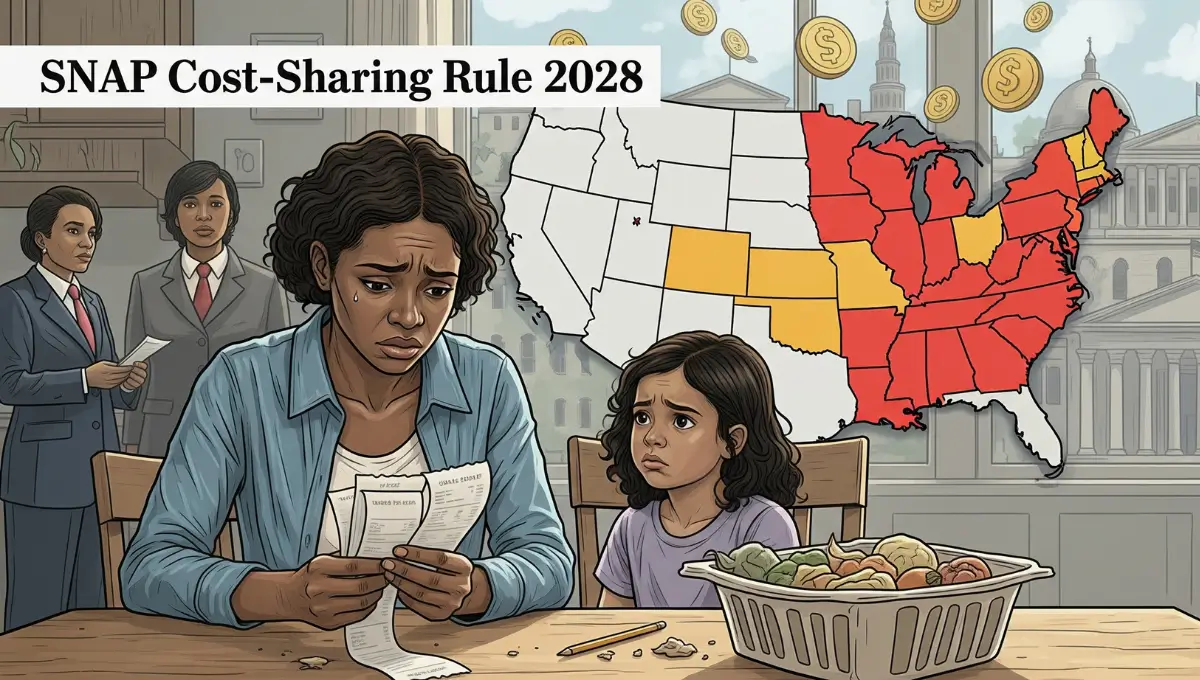
A second cost shift comes later — in 2028, not 2026. Starting in fiscal year 2028, some states will also begin paying a share of actual SNAP benefit costs, based on their payment error rates. States with error rates above 6% could owe 5% to 15% of benefit costs. This does not take effect this fall.
What this means for SNAP households right now:
- Your monthly benefit amount is not changing because of the September 30 deadline.
- Congress has moved to extend funding, not cut it, through early December.
- States — not SNAP recipients — absorb the administrative cost increase starting October 1.
- The benefit-cost-sharing rule that could affect state budgets more heavily does not begin until October 2027.
The bigger question is what happens after the current stopgap bills expire in early December. That’s when the real fight over full-year 2027 funding will happen. Anyone receiving SNAP should watch for updates from their state SNAP agency, not headlines predicting an automatic cutoff that isn’t supported by anything Congress has passed.
This is a developing story. Congress’s next funding deadline falls in early December 2026.