More than 5.3 million people have lost their food stamps in less than a year. Families across the country are opening empty cupboards and asking the same question: what happened to my SNAP?
The answer traces back to a law signed in July 2025. It rewrote the rules for who can get help buying groceries.
New U.S. Department of Agriculture data tells the story in numbers. In September 2025, 42.4 million people were enrolled in SNAP. By April 2026, that number had fallen to 37 million. That’s a drop of 5.3 million people in seven months.
Look back a full year, and the picture is even starker. Enrollment is down 4.9 million people, or nearly 12%, according to an analysis by the Center on Budget and Policy Priorities.
Only one state didn’t lose ground. Alaska’s enrollment actually grew 8.2% over the past year. Every other state saw declines.
Arizona was hit hardest. The state lost more than 400,000 recipients — a 55% drop. For the first time, more people are visiting Arizona food banks each month than are enrolled in SNAP.
“We think of ourselves as the canary in the coal mine,” said Natalie Jayroe, CEO of the Community Food Bank of Southern Arizona. “We are showing the rest of the country a really scary scenario.”
Why enrollment is falling
Two things happened at once.
First, new work requirements began February 1, 2026. Adults age 18 to 64 without dependents now must work, train, or volunteer 80 hours a month to keep their benefits.
Before, several groups didn’t have to meet this rule. Veterans. People without stable housing. Young adults who had aged out of foster care. That’s no longer true. All three groups can now be cut off if they don’t hit the hour requirement.
Second, the law shifted new costs onto states. States with higher payment error rates now owe the federal government money for their SNAP programs. Many states responded with tighter paperwork checks and stricter reviews — and that’s pushing eligible people off the rolls too, not just people the law targeted.
The children being left out
Kids were not supposed to be the target of these changes. But they’ve been swept up anyway.
More than 1 million children have lost SNAP benefits since July 2025, according to CBPP’s review of data from 19 states. That accounts for nearly half of the total enrollment drop in those states.
Behind the numbers are real kitchens and real families.
In Texas, a 6-year-old stood in front of her family’s empty refrigerator, hoping food would appear. In Delaware, an 11-year-old asked her mother why they could no longer afford her favorite cereal. In New Jersey, a mother had to tell her four children she couldn’t buy groceries.
Massachusetts saw nearly 50,000 fewer children on food assistance in just eight months — a 15% drop.
What comes next
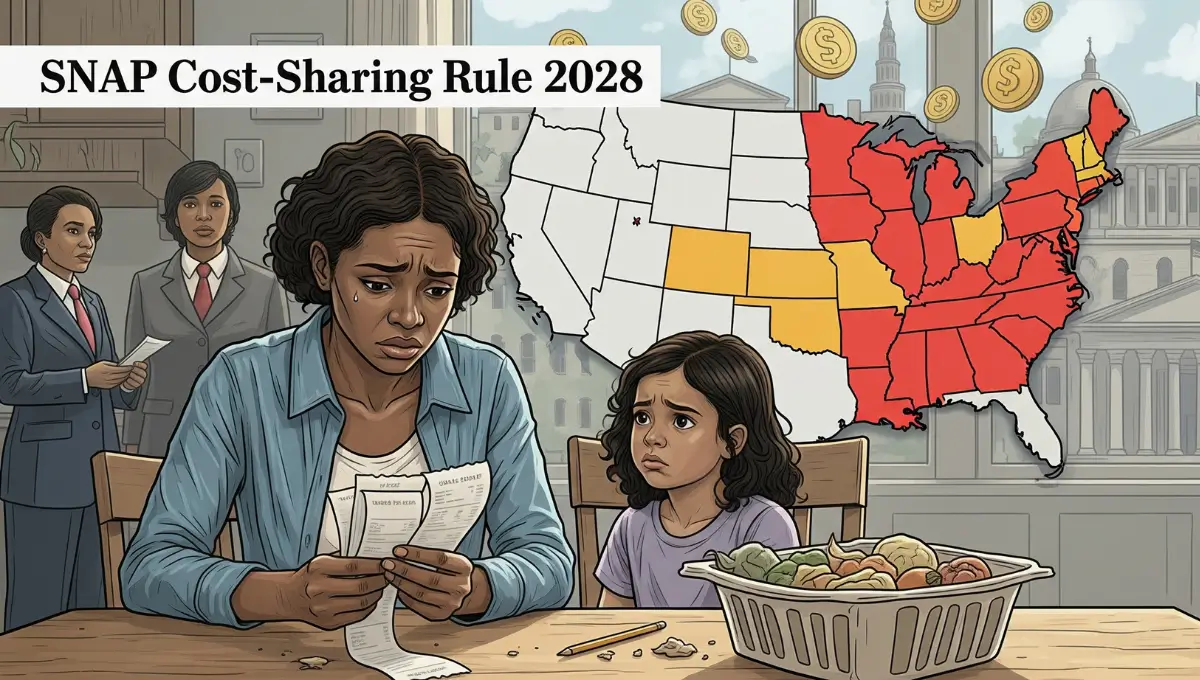
The cost shift to states is set to expand. Starting in October 2027, as many as 35 states could owe the federal government substantial new payments to keep running their SNAP programs at current levels. States that can’t or won’t pay face a choice: cut eligibility further, or leave the program.
Food banks are already stretched. Advocacy groups are pushing Congress to delay the cost shift before more families lose help.
For now, if your SNAP benefits changed or stopped, the shift is very likely tied to the new work-hour rule or a state eligibility review — not something you did wrong. Checking your state SNAP agency’s notice, or calling them directly, is the fastest way to find out which one applies to you.
If you’re experiencing food insecurity, contact your local food bank or dial 211 to find assistance programs in your area.