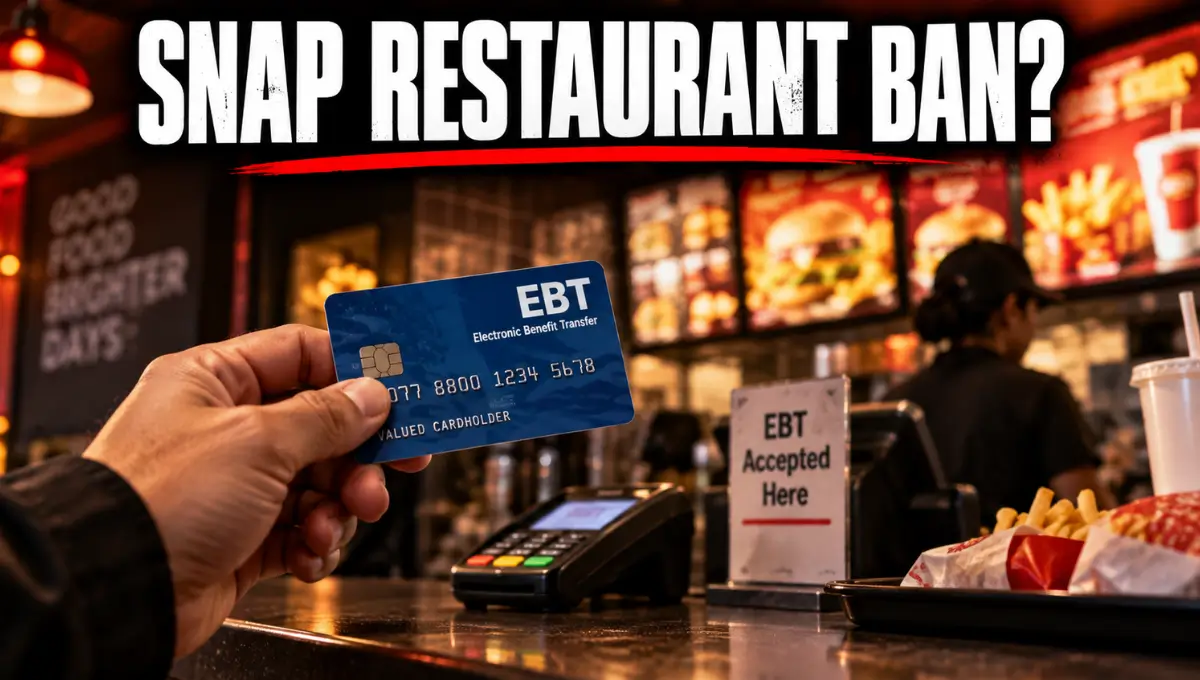
A new bill in Congress could end a program that lets some SNAP recipients buy hot meals at restaurants.
The bill is called H.R. 10268, the Ending Restaurant Purchases with SNAP Act of 2026. It was introduced on September 3, 2026, by Rep. Brandon Gill (R-Texas).
Right now, the bill is not law. It has only been referred to the House Agriculture Committee. It still needs to pass the House, pass the Senate, and be signed by the president before anything changes.
Most SNAP recipients already cannot use their benefits at restaurants. But there is one exception. It’s called the Restaurant Meals Program, or RMP. This program lets certain SNAP recipients use their EBT card at approved restaurants.
Not everyone qualifies for the RMP. It’s mainly for people who may struggle to cook their own food. That includes:
- People age 60 or older
- People with disabilities
- People experiencing homelessness
- Spouses of eligible participants
These groups often lack a stable kitchen, working appliances, or the physical ability to prepare meals. For them, the RMP can be a lifeline.
If H.R. 10268 becomes law, the RMP would be eliminated nationwide. States would no longer have the option to offer it.
Nine states currently run a Restaurant Meals Program:
- Arizona
- California
- Illinois (Cook and Franklin counties only)
- Maryland
- Massachusetts
- Michigan
- New York
- Rhode Island
- Virginia
If the bill passes, the change would take effect 180 days after it becomes law. That would give states, restaurants, and SNAP participants about six months to adjust.
It’s important to understand what this bill would not do. It would not end SNAP. It would not stop people from buying groceries with their benefits. Regular SNAP grocery purchases at eligible stores would continue as normal. Only the restaurant option would go away.
Supporters of the bill argue that SNAP dollars should go toward groceries, not restaurant meals. Rep. Gill has described the RMP as a loophole that strays from SNAP’s core purpose of funding household food.
Critics disagree. They point out that the program exists specifically for people who often cannot cook for themselves. Removing it, they say, could leave elderly, disabled, and homeless SNAP recipients with fewer real options for getting food.
The bill would also take away a choice that states currently have. Right now, each of the nine states decides for itself whether to offer the RMP and which restaurants can take part. H.R. 10268 would remove that option at the federal level entirely.
For now, the Restaurant Meals Program is still active in all nine states. Nothing has changed yet. The bill’s next step is a vote in the House Agriculture Committee.
Anyone using the RMP today can continue doing so unless and until Congress passes this bill and the president signs it into law.