The House of Representatives passed a sweeping new farm bill on April 30, 2026. The vote was 224–200. And for millions of low-income Americans, the outcome is alarming.
The bill is called the Farm, Food, and National Security Act of 2026, also known as H.R. 7567. It covers five years of U.S. food and agriculture policy — all the way through 2031.
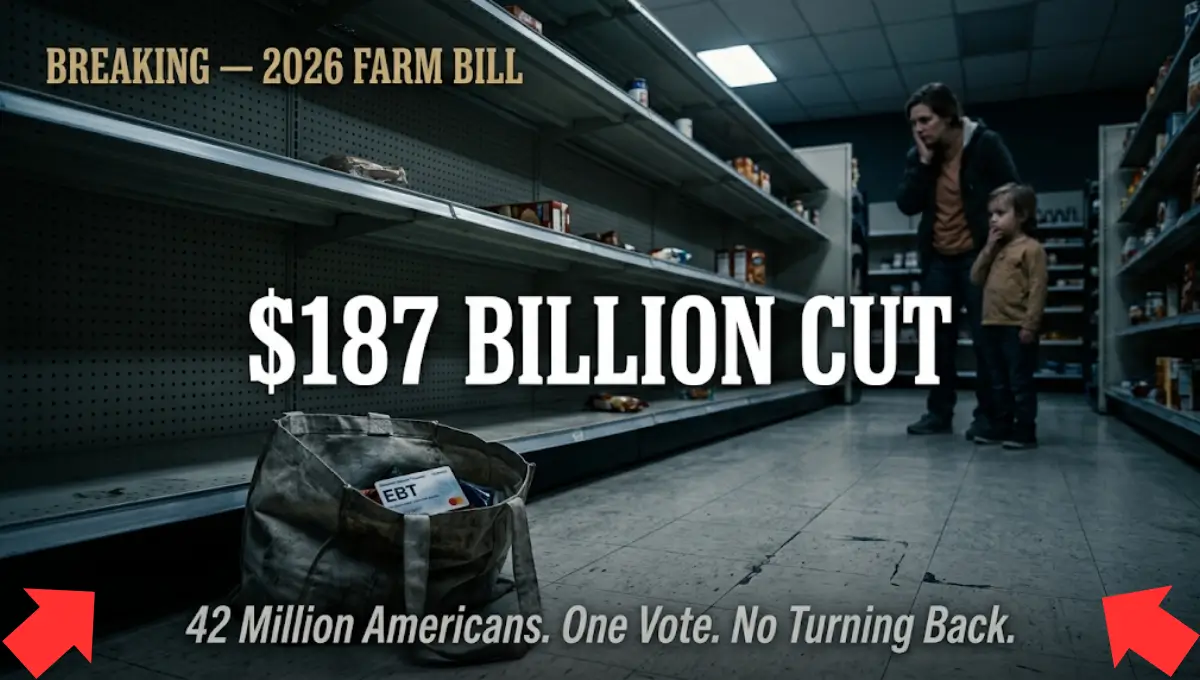
But the part that has hunger advocates most worried is simple: it does nothing to restore $187 billion in SNAP cuts.
Those cuts were already passed earlier through a separate law called H.R. 1, known as the One Big Beautiful Bill Act. The new farm bill doesn’t reverse them. It makes the new SNAP baseline permanent — embedding the cuts into standing agricultural law. Legis1
SNAP currently feeds approximately 42 million Americans — roughly 1 in 8 people in the United States.
The Food Research & Action Center (FRAC) called the House vote “deeply troubling,” noting that the bill fails to reverse the $187 billion in SNAP cuts and that mandatory SNAP funding sits at $101.2 billion — $6.2 billion below fiscal year 2026 levels. Food Research & Action Center
The group warned: “This reduction threatens SNAP’s ability to fully meet the needs for an increasing number of households — including working families, children, older adults, veterans, and people with disabilities.”
Three million Americans have already lost food assistance since H.R. 1 passed. The farm bill does not bring them back. Legis1
Expanded work requirements included in the earlier reconciliation law could result in 2.4 million additional people losing benefits every month between now and 2034. Food & Water Watch
Consider a working single mother earning just above the poverty line. Under the new rules, she may lose benefits — not because her situation changed, but because stricter eligibility rules and added paperwork requirements now push her out of the program.
Not everything in the bill drew opposition. One provision won 384–35 in the House — a rare landslide.
The HOT Rotisserie Chicken Act, introduced by Rep. Rick Crawford (R-AR), now allows SNAP recipients to buy hot prepared foods like rotisserie chicken. Previously, SNAP banned hot food purchases entirely. Advocates for elderly and disabled recipients celebrated the change, since many cannot cook for themselves.
The bill also upgrades SNAP EBT cybersecurity systems — a priority for many county governments — and reauthorizes the Gus Schumacher Nutrition Incentive Program (GusNIP), which helps SNAP users afford fresh fruits and vegetables.
Republicans argue the overall bill reduces fraud and waste and strengthens long-term farm policy stability. Senate Agriculture Committee Chair John Boozman (R-AR) has said he plans to begin a Senate markup by late May or early June 2026.
But getting the bill through the Senate will not be easy.
The Senate requires 60 votes to pass, meaning Republicans need at least 7 to 10 Democratic votes. Boozman himself acknowledged: “There’s no path forward on the farm bill if it is not bipartisan.”
Key sticking points include the SNAP funding level and a provision that blocks states like California from setting their own animal welfare rules for livestock.
The American Friends Service Committee said the bill fails on its most basic obligation — noting that SNAP benefits were already insufficient before this round of cuts and that slashing them further will only deepen harm for the families who rely on the program most. American Friends Service Committee
FRAC urged Congress to reverse the $187 billion SNAP cut, restore federal administrative cost-sharing to 50 percent, and eliminate punitive benefit cost-sharing tied to error rates — arguing that states and families “need less red tape and more stability.” Food Research & Action Center
What happens next in the Senate will determine whether these cuts become permanent law — or whether millions of Americans get any relief at all.
For official SNAP information and eligibility, visit USDA Food and Nutrition Service.
Sources: FRAC (frac.org), Farm Aid (farmaid.org), American Friends Service Committee (afsc.org), Legis1 (legis1.com), USDA FNS