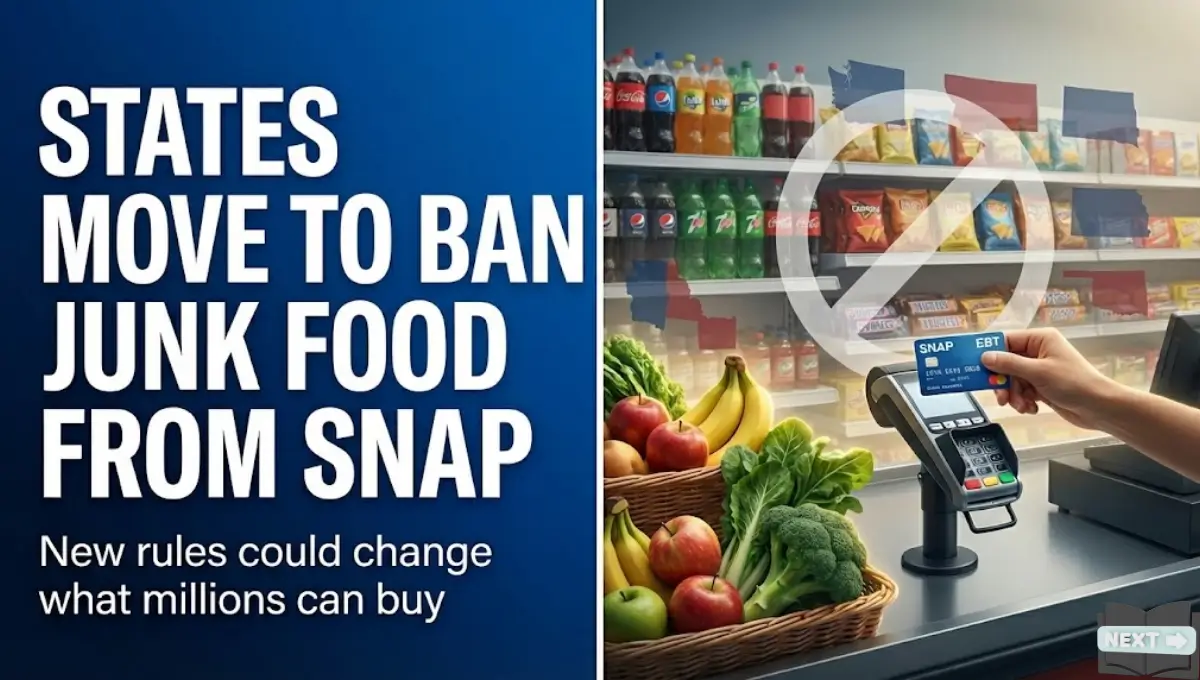
Several U.S. states are moving to restrict the types of food SNAP recipients can buy, reigniting a long-running debate over nutrition, personal choice, and government oversight.
The proposals target sugary drinks, candy, and highly processed snacks, with supporters arguing the changes promote public health. Critics warn the restrictions could stigmatize low-income families and complicate an already fragile benefits system.
SNAP stands for Supplemental Nutrition Assistance Program. It gives money on a card to buy groceries. Right now, you can use it for most foods.
Hot meals, alcohol, and vitamins are out. But junk food like soda and chips is okay. States can’t change that without federal okay.
Read More: New Work Requirements Hit Medicaid and SNAP Nationwide
That’s where waivers come in. States ask the USDA for permission to limit items. USDA runs SNAP. In the past, they said no to most requests. They worried about costs and fairness. But things changed in 2025.
The new admin backs healthier choices. They call it the Make America Healthy Again plan. This opened doors for states.
Eighteen states now have USDA approval for SNAP food restrictions. They start in 2026. The first 12 got the go in the spring. These include Arkansas, Colorado, Florida, Idaho, Indiana, Iowa, Louisiana, Nebraska, Oklahoma, Texas, Utah, and West Virginia.
Six more joined in December: Hawaii, Missouri, North Dakota, South Carolina, Virginia, and Tennessee. A few others, like New York and California talk about it but haven’t applied yet.
These states pilot the changes. They test how it works. If good, more could follow. The junk food SNAP ban focuses on unhealthy items.
Read More: States Brace for Higher SNAP and Medicaid Costs Under New Federal Budget
Sugary drinks like soda and energy drinks top the list. Candy, cookies, and chips are next. Some ban juices with low fruit content or dessert items. The goal is to cut processed foods high in sugar and salt.
Each state picks its list. Missouri bans soda, candy, and energy drinks. Virginia targets sweetened beverages. Hawaii adds limits on processed snacks. Rules vary. But all aim to push fruits, veggies, and whole foods. This fits USDA SNAP policy to promote nutrition.
Supporters say it’s about health. Obesity and diabetes hit low-income groups hard. SNAP spends billions on junk food. Taxpayers foot the bill. Agriculture Secretary Brooke Rollins said it restores SNAP to its purpose, nutrition.
Health Secretary Robert F. Kennedy Jr. backs it. He says bad food leads to sickness taxpayers pay to treat. States like Virginia note it saves money long-term by cutting health costs.
Opponents raise concerns. Anti-hunger groups say it limits choice. Low-income families deserve options like everyone. The Food Research & Action Center warns of stigma. People feel shamed at checkout.
Stores face hassles scanning items. Rural areas lack healthy food access. Critics say education works better than bans. Past pilots showed little health gain but more admin work.
USDA plays a key role. They review waiver requests. States must show how they’ll enforce it. This includes store training and tech updates. USDA approved the 18 because of the new focus on health. But they require reports on impacts. If problems arise, waivers can end after two years.
For SNAP recipients, little changes now. If your state has a waiver, watch for letters. Rules start January 2026 in most places. Missouri waits until October. You can still buy staples like bread and milk. Check your state’s list online. If items get cut, plan grocery trips. Local food banks offer help.
States hit hardest include those with high SNAP use and tight budgets. Southern states like Louisiana and Arkansas have many users. They face big admin costs to update systems. Rural states like North Dakota struggle with store compliance. Big states like Florida and Texas see high numbers affected, millions of people. Tax-cut states like Oklahoma worry about filling budget holes. They may seek delays or extra federal help.
This could mean tighter SNAP eligibility rules in some places. States might add work checks or income reviews to save money. Enrollment may drop if paperwork grows. Benefits stay the same for now. But fewer options at stores could raise food costs for families. Health groups hope for better diets. Others fear more hunger.
What’s next? USDA decides on more waivers in early 2026. Pilots run for two years with reports due. Legal challenges could come from advocacy groups. They argue bans hurt access. States watch costs and health data. If pilots work, more states may join. If not, rules could loosen. Check your state DHS site for updates. Stay informed to plan ahead.