Millions of families could lose food assistance as 44 states face crushing financial penalties under new federal SNAP rules.
The One Big Beautiful Bill Act is forcing states to pay part of SNAP costs if their error rates are too high. The change starts in fiscal year 2028, but it’s based on how states perform right now.
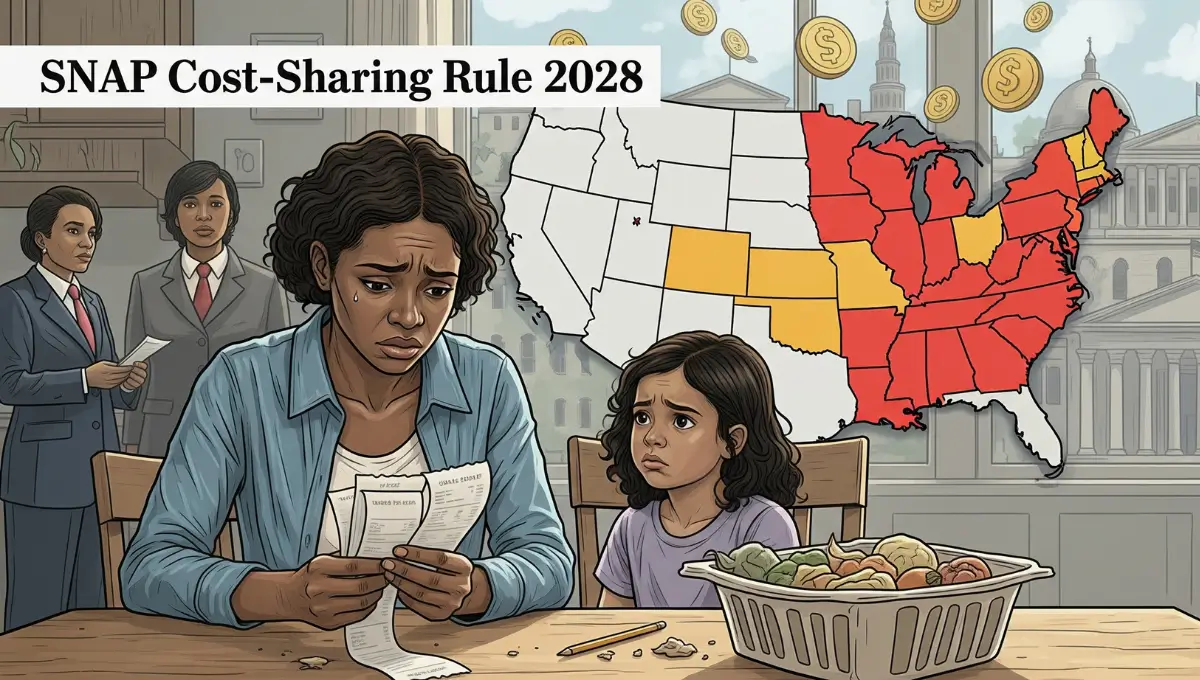
Only eight states are safe from penalties. The other 44 are at risk of paying hundreds of millions—or even billions—of dollars.
Here’s how the penalties work. States with SNAP payment error rates above 6% must cover between 5% and 25% of benefit costs. The worse the error rate, the more they pay.
The problem is serious. The national error rate hit 10.93% in 2024, according to USDA data. That’s nearly double the safe threshold.
Some states are in deep trouble:
- Alaska’s error rate is nearly 25%—the worst in the nation
- Washington D.C. is at 17%
- California, Connecticut, Delaware, Florida, Maryland, and Mississippi all exceed 10%
These states could face penalties costing hundreds of millions each year. Maryland alone expects costs to jump by $300 million or more. New York’s costs could increase seven times what they pay now.
42 million Americans receive SNAP benefits. Most live in states now facing penalties.
“States under financial pressure have two choices,” one policy expert told USA Today. “Pay the penalties or cut benefits.”
The timing couldn’t be worse. Grocery prices have risen 29% since 2020. Families already struggling to afford food may get less help just when they need it most.
States that can’t lower their error rates by October 2027 must start paying. Those with rates above 13.32% get one or two extra years, but they’ll pay even more later.
Every state must also submit a Corrective Action Plan if their error rate stays at or above 6%. The plans must show exactly how they’ll fix the problem.
States that refuse could lose federal funding entirely. The USDA can suspend programs or withhold money from states that don’t comply.
Some states are already taking action. Mississippi is installing new computer systems and training staff to drop its 10.69% error rate. Other states are using artificial intelligence to catch eligibility mistakes faster.
But technology costs money. States must also pay 75% of administrative costs starting in 2027—up from 50% now. That’s another financial hit coming at the same time.
South Dakota is one of the few success stories. The state has kept its error rate below 6% since 2003. Idaho also maintains low rates and won’t face major penalties.
Experts warn the changes could make it harder for states to respond during recessions. When unemployment spikes, SNAP applications flood state offices. Higher costs could prevent states from helping everyone who qualifies.
Low-income families in high-error states face the greatest risk. If states can’t afford the penalties, benefit cuts will hit the people who need help most.
The penalties start based on error rates from fiscal years 2025 and 2026. States have less than three years to fix the problem or face massive costs that could reshape food assistance nationwide.