Last Updated: February 2026
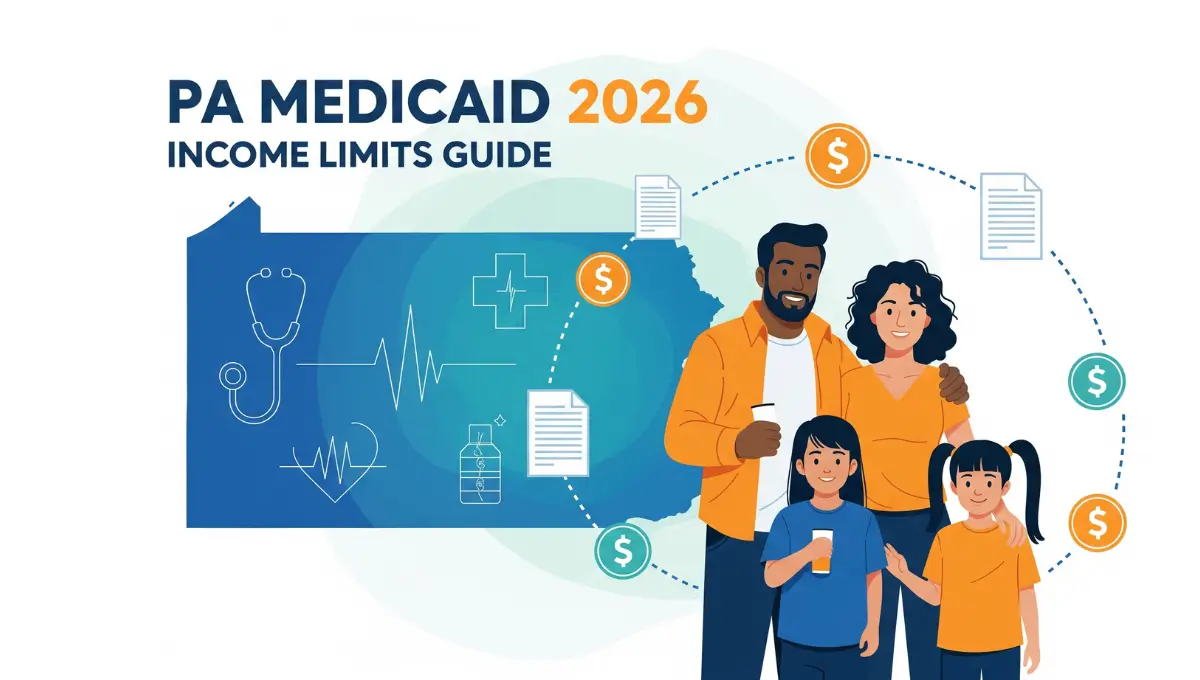
Pennsylvania Medicaid income limits for 2026 vary by household size and program type.
Single adults qualify with monthly income up to $1,732, while a family of four can earn up to $2,982 monthly for nursing home or waiver services.
Quick Summary:
- Single adults: $1,732/month income limit for standard Medicaid
- Families of four: Up to $2,982/month for long-term care services
- Asset limit: $2,000 for individuals ($8,000 with exemptions)
- Spousal protections available for married couples
- Income limits updated annually by Pennsylvania DHS
- No asset test for CHIP and some pregnancy coverage
Page Contents
- 1 What Are Pennsylvania Medicaid Income Limits?
- 2 Understanding Pennsylvania Medicaid Eligibility 2026
- 3 Long-Term Care Income Limits
- 4 How Income Is Counted
- 5 Asset Limits for Pennsylvania Medicaid
- 6 Medicaid Fee Schedule 2026: What It Means for You
- 7 How to Apply for Pennsylvania Medicaid
- 8 Medicaid Income Limits by State 2026
- 9 Special Programs and Exemptions
- 10 What to Do If You’re Denied
- 11 Keeping Your Coverage
- 12 Frequently Asked Questions
- 12.1 What is the income limit for Pennsylvania Medicaid in 2026?
- 12.2 Does Pennsylvania Medicaid count assets?
- 12.3 Can I get Pennsylvania Medicaid if I work?
- 12.4 How long does Pennsylvania Medicaid approval take?
- 12.5 What happens if my income goes over the limit?
- 12.6 Does Pennsylvania Medicaid cover dental for adults in 2026?
- 13 Official Resources
What Are Pennsylvania Medicaid Income Limits?
Pennsylvania Medicaid income limits determine who qualifies for free or low-cost health coverage. The limits change based on your household size and the type of Medicaid program you need.
The Pennsylvania Department of Human Services (DHS) sets these limits each year. They follow federal poverty guidelines.
1. MAGI Medicaid (Expansion Adults, Parents, & Caregivers)
Eligibility is set at 138% of the FPL. This covers the “Expansion” population (non-elderly adults without disability).
| Household Size | Annual Income Limit (138%) | Approx. Monthly Limit |
|---|---|---|
| 1 | $21,583 | $1,799 |
| 2 | $29,229 | $2,436 |
| 3 | $36,874 | $3,073 |
| 4 | $44,520 | $3,710 |
| 5 | $52,165 | $4,347 |
| Each Add’l | + $7,645 | + $637 |
2. Pregnant Women & Infants (Under Age 1)
Eligibility is significantly higher to ensure prenatal care, set at 220% of the FPL.
| Household Size | Annual Income Limit (220%) | Approx. Monthly Limit |
|---|---|---|
| 1 | $34,408 | $2,867 |
| 2 | $46,596 | $3,883 |
| 3 | $58,784 | $4,899 |
| 4 | $70,972 | $5,914 |
3. Children’s Health Insurance Program (CHIP)
In PA, CHIP covers children in households earning up to 319% of the FPL.
- Family of 3: ~$105,200 annually.
- Family of 4: ~$127,000 annually.
4. Seniors & Disabled (Non-MAGI)
For those 65+ or with a disability, the income limit is strictly tied to the Federal Benefit Rate (FBR) or 100% FPL, depending on the specific sub-program.
- Individual: ~$12,193 annually ($1,016/mo).
- Couple: ~$18,291 annually ($1,524/mo).
Source: Pennsylvania Department of Human Services
These limits apply to Modified Adjusted Gross Income (MAGI) programs. This includes most adults, children, and pregnant women.
1. General Adults and Families (MAGI-Based)
For most adults under 65, eligibility is determined by Modified Adjusted Gross Income (MAGI).
- Adults (19–64): Up to 138% FPL, which is approximately $1,799 per month for a single person.
- Pregnant Women: Up to 220% FPL, roughly $2,596 per month.
- Children (0–18): Up to 319% FPL (including CHIP), approximately $4,147 per month.
2. Seniors and Individuals with Disabilities (Non-MAGI)
Eligibility for those 65+ or with disabilities often includes an asset test in addition to income limits.
- Regular Medical Assistance (ABD): The monthly income limit is $1,016.10 for an individual and $1,524.30 for a couple.
- SSI Recipients: Individuals receiving Supplemental Security Income (SSI) are typically automatically eligible for Medicaid.
3. Long-Term Care & Home-Based Waivers
For Nursing Home care or Community HealthChoices (Waiver) services:
- Gross Monthly Income Limit: $2,982 (300% of the Federal Benefit Rate).
- Resource Limits:
- If income is at or below $2,982, the asset limit is $8,000.
- If income is above $2,982, the asset limit drops to $2,400.
4. Medical Assistance for Workers with Disabilities (MAWD)
MAWD allows individuals with disabilities who are working to have higher income:
- Income Limit: Up to 250% FPL, which is $3,325 per month for a single person in 2026.
- Asset Limit: $10,000.
| Category | Monthly Income Limit (Single) | Asset Limit (Single) |
|---|---|---|
| Expansion Adults | ~$1,799 (138% FPL) | None |
| Pregnant Women | ~$2,596 (220% FPL) | None |
| Aged/Blind/Disabled | $1,016.10 | $2,000 |
| Long-Term Care/Waiver | $2,982 | $2,400 – $8,000 |
| MAWD (Working Disabled) | $3,325 | $10,000 |
Understanding Pennsylvania Medicaid Eligibility 2026
Income limits are just one part of Pennsylvania Medicaid eligibility 2026. You must also meet other requirements.
Who Qualifies for Pennsylvania Medicaid?
Children and Teens:
- Age 18 and under
- Income up to 215% of federal poverty level
- No asset test required
Pregnant Women:
- Income up to 215% of federal poverty level
- Covers prenatal, delivery, and postpartum care
- No asset limit
Parents and Caretakers:
- Income up to 133% of federal poverty level
- Must have children under 19 living with them
- Asset limit of $2,000 applies
Adults Without Children:
- Age 19-64
- Income up to 138% of federal poverty level
- Must be U.S. citizen or legal resident
Seniors and People with Disabilities:
- Age 65+ or have qualifying disability
- Different income rules apply
- May qualify for long-term care services
Long-Term Care Income Limits
Long-term care Medicaid has different rules. This covers nursing home care and home-based waiver services.
2026 Long-Term Care Financial Limits
Single Applicants:
- Monthly income limit: $2,982
- Asset limit: $2,000 (or $8,000 with exemptions)
- Covers nursing home and waiver programs
Married Couples:
- Applicant income limit: $2,982/month
- Spouse can keep income up to $4,066.50/month
- Spouse asset protection: Up to $157,920
Pennsylvania offers spousal protections. The healthy spouse can keep more income and assets. This prevents financial hardship.
For complete details on qualifying, review Pennsylvania Medicaid income limits 2026 guidelines from DHS.
How Income Is Counted
Pennsylvania uses Modified Adjusted Gross Income (MAGI) for most Medicaid programs. Understanding what counts helps you know if you qualify.
What Counts as Income?
Counted Income:
- Wages and salaries
- Social Security benefits
- Unemployment compensation
- Pension and retirement income
- Self-employment earnings
- Rental income
- Interest and dividends
Not Counted:
- Child support received
- Veterans benefits (some programs)
- Supplemental Security Income (SSI)
- Certain Native American income
- Tax refunds
Income After Deductions
MAGI uses your adjusted gross income. This means income after certain tax deductions. It may be lower than your gross pay.
Asset Limits for Pennsylvania Medicaid
Some Medicaid programs have asset limits. Others don’t count assets at all.
2026 Asset Rules by Program
No Asset Test:
- Children’s Medicaid
- Pregnant women coverage
- Parent/caretaker coverage (MAGI-based)
- Medicaid expansion adults
$2,000 Asset Limit:
- Aged, Blind, and Disabled (ABD) programs
- Long-term care applicants
- SSI-related coverage
$8,000 Total Exemption:
- Pennsylvania allows $6,000 additional exemption
- Applies when income is below certain thresholds
- Helps working people with disabilities
What Assets Don’t Count?
Exempt Assets:
- Primary home (up to $713,000 equity)
- One vehicle
- Personal belongings and household items
- Life insurance with face value under $1,500
- Burial funds up to $1,500
- IRA or 401(k) if making withdrawals
Medicaid Fee Schedule 2026: What It Means for You
Understanding the Medicaid fee schedule 2026 helps you know what services are covered and how providers get paid.
Common Service Reimbursement Rates
Primary Care Visits:
- Short office visit (99213): $48.50 – $55.00
- Longer visit (99214): $70.00 – $82.00
- Preventive screenings for children: Higher rates to encourage care
Dental Services:
- Oral evaluation (D0120): ~$28.00
- Adult teeth cleaning (D1110): ~$52.00
- Adult dental: Emergency only in most cases
Mental Health Services:
- 45-minute therapy session (90834): $85.00 – $110.00
- Psychiatric evaluation (90791): $130.00 – $160.00
- Rates may vary by managed care plan
Important 2026 Coverage Changes
GLP-1 Drug Restrictions: Pennsylvania Medicaid stopped covering weight-loss drugs like Wegovy in 2026. Coverage continues only for diabetes or approved medical conditions.
Rural Health Clinic Rates: Providers in rural counties receive higher “all-inclusive” rates. Often exceeding $150 per visit to maintain access.
How to Apply for Pennsylvania Medicaid
Applying for Pennsylvania Medicaid is free. You can apply online, by phone, or in person.
Three Ways to Apply
1. Online (Fastest):
- Visit COMPASS
- Create an account
- Complete application in 30-45 minutes
- Upload documents electronically
2. By Phone:
- Call 1-866-550-4355
- Representatives available weekdays
- Assistance in multiple languages
- Accommodations for hearing impaired
3. In Person:
- Visit your County Assistance Office
- Bring required documents
- Get help completing forms
- Immediate answers to questions
Documents You’ll Need
Proof of Identity:
- Driver’s license or state ID
- Birth certificate
- Social Security card
Proof of Income:
- Recent pay stubs (last 30 days)
- Tax returns
- Social Security award letters
- Unemployment statements
Proof of Residency:
- Utility bill
- Lease or mortgage statement
- Mail with your current address
Medicaid Income Limits by State 2026
Pennsylvania’s income limits differ from other states. Each state sets its own Medicaid rules within federal guidelines.
How Pennsylvania Compares
Pennsylvania expanded Medicaid under the Affordable Care Act. This means more adults qualify compared to non-expansion states.
For comparison across all states, check Medicaid income limits by state 2026. You’ll see Pennsylvania offers more generous coverage than many Southern states.
Key Pennsylvania Advantages:
- Covers childless adults up to 138% poverty level
- No work requirements
- Retroactive coverage up to 3 months
- Comprehensive benefits including dental for children
Special Programs and Exemptions
Pennsylvania offers several special Medicaid programs beyond standard coverage.
CHIP (Children’s Health Insurance Program)
Income Limits:
- Children in families earning 215%-318% of poverty level
- Monthly premiums range from $0-$78
- Covers routine care, dental, and vision
Medicaid Waiver Programs
Available Waivers:
- OBRA waiver for people with disabilities
- Aged waiver for seniors
- Autism waiver
- COMMCARE waiver
- Person/Family Directed Support waiver
These programs allow people to receive care at home. Income limits may be higher than nursing home Medicaid.
Spend-Down Program
If your income exceeds limits, you may still qualify. The spend-down program works like a deductible.
How It Works:
- Calculate your excess income
- Pay medical bills equal to that amount
- Medicaid covers remaining costs
- Resets monthly
What to Do If You’re Denied
Don’t give up if your application is denied. You have the right to appeal.
Appeal Process Steps
1. Request Appeal (Within 30 Days):
- Call or write to County Assistance Office
- Explain why you disagree
- Request a fair hearing
2. Gather Evidence:
- Collect pay stubs and bank statements
- Get letters from doctors if disability-related
- Organize all paperwork
3. Attend Hearing:
- Present your case to an administrative law judge
- Bring witnesses if helpful
- Receive written decision
4. Further Appeals:
- Commonwealth Court if still denied
- Legal aid may help for free
Common Denial Reasons
Income Calculation Errors:
- Wrong household size used
- Incorrect income counted
- Deductions not applied
Missing Documentation:
- Incomplete application
- Documents not received
- Verification deadline missed
Eligibility Category Issues:
- Applied to wrong program
- Immigration status questions
- Residency not established
Keeping Your Coverage
Once approved, you must renew your Medicaid annually. Pennsylvania sends renewal forms by mail.
Annual Renewal Requirements
What to Do:
- Complete renewal form when received
- Report any changes within 10 days
- Update income and household information
- Respond to requests for verification
Automatic Renewals: Pennsylvania verifies eligibility using electronic data sources. If your information matches, renewal happens automatically.
Reporting Changes
You must report these changes within 10 days:
- New job or income increase
- Household size changes
- Address changes
- Pregnancy
- Gained other health insurance
Report changes through COMPASS or by calling your County Assistance Office.
Frequently Asked Questions
What is the income limit for Pennsylvania Medicaid in 2026?
For single adults, the monthly income limit is $1,732. Families of four can earn up to $3,582 monthly. Long-term care Medicaid allows up to $2,982/month for nursing home or waiver services.
Does Pennsylvania Medicaid count assets?
Most programs don’t count assets. Children, pregnant women, and expansion adults have no asset test. Long-term care and disability programs have a $2,000 limit, though Pennsylvania may exempt up to $8,000.
Can I get Pennsylvania Medicaid if I work?
Yes. Working adults qualify if income stays below limits. Pennsylvania doesn’t have work requirements. Some programs allow higher income limits for people with disabilities who work.
How long does Pennsylvania Medicaid approval take?
Standard applications are processed within 45 days. Disability applications take up to 90 days. Emergency coverage may be available immediately for pregnant women or children.
What happens if my income goes over the limit?
You may lose coverage unless you qualify for a spend-down. Report income changes immediately. You might qualify for subsidized marketplace insurance instead.
Does Pennsylvania Medicaid cover dental for adults in 2026?
Adult dental coverage is limited to emergency services only. Children receive comprehensive dental benefits. Some waiver programs offer expanded dental coverage for qualifying adults.
Official Resources
For the most current information, visit these official sources:
- Pennsylvania Department of Human Services – Official Medicaid program information
- COMPASS Application Portal – Apply or manage benefits online
- Centers for Medicare & Medicaid Services – Federal Medicaid guidance and state comparisons
Questions? Call the Pennsylvania Medicaid helpline at 1-866-550-4355 (Monday-Friday, 8:30 AM – 4:45 PM EST).