Source: Ohio Department of Medicaid, Medicaid Eligibility Procedure Letter (MEPL) No. 194. Issued January 21, 2026. Effective March 1, 2026.
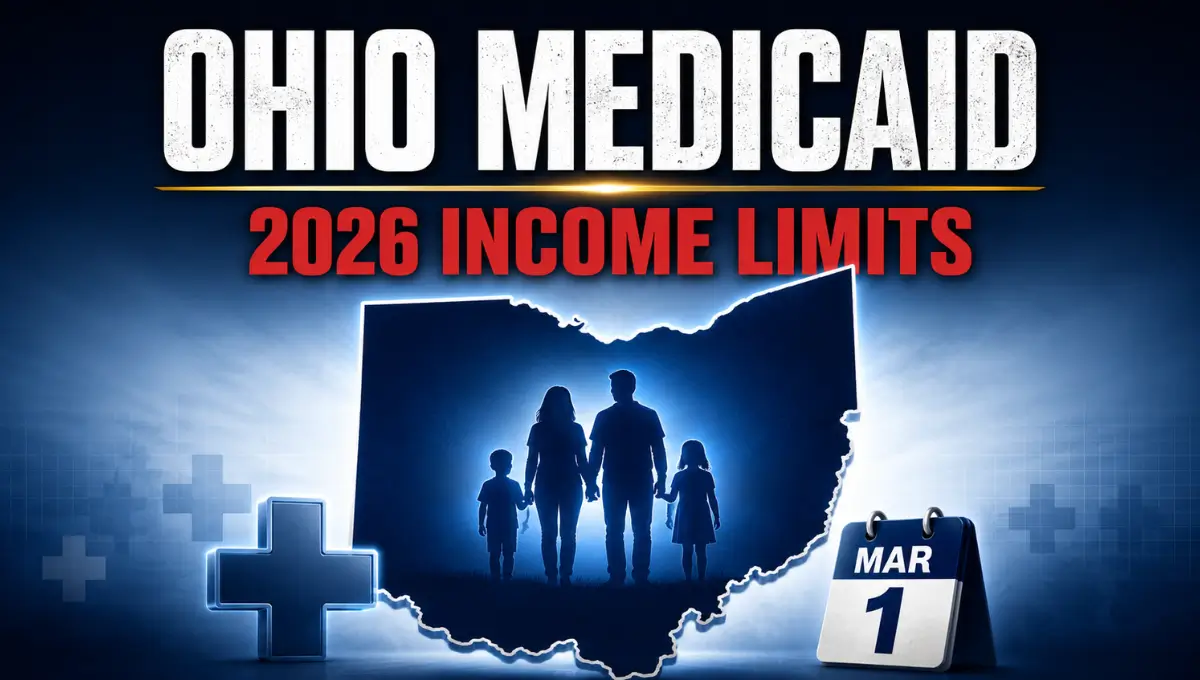
Ohio Medicaid income limits changed on March 1, 2026. The new limits affect adults, parents, children, and pregnant women who apply for or renew Medicaid coverage in Ohio.
The change happened because the U.S. Department of Health and Human Services updated the federal poverty level (FPL) on January 14, 2026. Ohio then adjusted its Medicaid income rules to match, as required by federal law.
Your income limit depends on your household size and which Medicaid group you fall into. A single adult can now earn up to $1,769 a month and still qualify for MAGI-based Medicaid.
A pregnant woman in a household of one can earn up to $2,660 a month. Below, you’ll find every 2026 limit broken down by category.
Article Summary
- Ohio’s new Medicaid income limits took effect March 1, 2026.
- A single adult can earn up to $1,769/month for MAGI-based Medicaid (133% FPL).
- Pregnant women can earn up to $2,660/month for a household of one (200% FPL).
- Children may qualify at higher limits, up to $2,740/month for one child (206% FPL) if they lack other insurance.
- Income limits change with household size, so a family of four has a higher limit than a single person.
- These are Ohio-specific numbers. Other states set their own limits.
What Is Changing for Ohio Medicaid in 2026
Ohio updates its Medicaid income limits every year. This keeps the limits in step with the cost of living. The 2026 update comes from an official notice called MEPL No. 194.
The new limits apply to several programs at once. These include MAGI-based Medicaid, Medicaid Buy-in for Workers with Disabilities, Ohio WorkAbility, and the Medicare Premium Assistance Programs.
Why the Income Limits Changed
The federal government updates the poverty level every January. Ohio must then update its own Medicaid rules to match, under Section 1905(p)(2)(D) of the Social Security Act. This is a routine, yearly process, not a one-time policy shift.
Ohio Medicaid Income Limits by Household Size (2026)
Ohio does not use one single income limit for everyone. Instead, each group of applicants has its own limit, based on a percentage of the federal poverty level. All figures below are monthly income limits.
MAGI-Based Medicaid for Adults (Ages 19–64)
This is the main Medicaid group for working-age adults. The limit is set at 133% of the federal poverty level.
| Family Size | Monthly Income Limit |
|---|---|
| 1 | $1,769 |
| 2 | $2,399 |
| 3 | $3,028 |
| 4 | $3,658 |
| 5 | $4,288 |
| 6 | $4,917 |
Income Limits for Parents and Caretaker Relatives
Parents and caretaker relatives use a lower income limit, set at 90% of the federal poverty level.
| Family Size | Monthly Income Limit |
|---|---|
| 1 | $1,197 |
| 2 | $1,623 |
| 3 | $2,049 |
| 4 | $2,475 |
| 5 | $2,901 |
| 6 | $3,327 |
Income Limits for Children
Ohio sets two different limits for kids. It depends on whether the child already has other creditable health insurance.
Children with creditable insurance (156% FPL):
| Family Size | Monthly Income Limit |
|---|---|
| 1 | $2,075 |
| 2 | $2,814 |
| 3 | $3,552 |
| 4 | $4,290 |
| 5 | $5,029 |
| 6 | $5,767 |
Children without creditable insurance (206% FPL):
| Family Size | Monthly Income Limit |
|---|---|
| 1 | $2,740 |
| 2 | $3,715 |
| 3 | $4,690 |
| 4 | $5,665 |
| 5 | $6,641 |
| 6 | $7,616 |
Income Limits for Pregnant Women
Pregnant women get a higher income limit than most other adult groups, set at 200% of the federal poverty level.
| Family Size | Monthly Income Limit |
|---|---|
| 1 | $2,660 |
| 2 | $3,607 |
| 3 | $4,554 |
| 4 | $5,500 |
| 5 | $6,447 |
| 6 | $7,394 |
Income Limits for Ages 19 or 20
Young adults ages 19 and 20 use a separate, lower limit, set at 44% of the federal poverty level.
| Family Size | Monthly Income Limit |
|---|---|
| 1 | $586 |
| 2 | $794 |
| 3 | $1,002 |
| 4 | $1,210 |
| 5 | $1,419 |
| 6 | $1,627 |
Medicaid Buy-in for Workers with Disabilities and Ohio WorkAbility
These two programs let working Ohioans with disabilities keep Medicaid coverage even with higher earnings. Starting March 1, 2026, the individual income limit rose to 250% of the federal poverty level.
| Group | Monthly Income Limit |
|---|---|
| Individual | $3,325 |
Medicare Premium Assistance Programs (MPAP) Income Limits
MPAP helps people who have both Medicare and low income. It pays for things like Medicare premiums, deductibles, or copays, depending on the specific program you qualify for.
QMB, SLMB, QI-1, and QDWI Limits
Each MPAP program has its own income cutoff. QMB has the lowest limit, and QDWI has the highest.
| Family Size | QMB (100%) | SLMB (120%) | QI-1 (135%) | QDWI (200%) |
|---|---|---|---|---|
| 1 | $1,330 | $1,596 | $1,796 | $2,660 |
| 2 | $1,804 | $2,164 | $2,435 | $3,607 |
| 3 | $2,277 | $2,732 | $3,074 | $4,554 |
| 4 | $2,750 | $3,300 | $3,713 | $5,500 |
| 5 | $3,224 | $3,868 | $4,352 | $6,447 |
| 6 | $3,697 | $4,436 | $4,991 | $7,394 |
Federal vs. State Rules: How Ohio Sets These Limits
The federal government sets the poverty level every year. Each state then decides how to apply it to Medicaid. Ohio uses several different percentages, depending on who is applying.
This means Ohio’s numbers won’t match every other state’s numbers. If you’re comparing options across state lines, check our guide to Medicaid income limits by state in 2026 to see how Ohio stacks up.
How to Apply for Ohio Medicaid in 2026
Applying for Medicaid in Ohio is a straightforward process. Follow these steps to get started.
- Gather your documents. You’ll need proof of income, household size, and residency.
- Choose how to apply. Use the Ohio Benefits self-service portal online, call the Ohio Medicaid Consumer Hotline, or visit your county Job and Family Services office.
- Submit your application. Fill out all sections completely to avoid delays.
- Wait for a decision. The county reviews your income against the limits above.
- Check your mail. You’ll get a Notice of Action letter with the final decision.
Before you apply, it helps to understand the full picture of who qualifies. Our guide to Medicaid eligibility in 2026 breaks down non-income rules too, like residency and citizenship requirements.
Check Your Eligibility Before You Apply
Income limits are only part of the picture. Resource limits, household size, and disability status all matter too.
To save time, try our Medicaid eligibility calculator for 2026 before you submit a full application. It’s a fast way to see if your income likely fits within Ohio’s limits. If you’re curious about what services and provider payments Medicaid covers once you’re enrolled, our Medicaid fee schedule for 2026 explains how the state pays providers.
Frequently Asked Questions
When did Ohio’s 2026 Medicaid income limits take effect?
The new limits took effect March 1, 2026. Ohio’s county Job and Family Services offices began using them for new applications and renewals on that date.
How much can I earn and still qualify for Ohio Medicaid in 2026?
It depends on your group. A single adult can earn up to $1,769 a month under MAGI-based Medicaid. Pregnant women and children may qualify at higher income levels.
What happens if my income is slightly over the limit?
You may still qualify for a different Medicaid group, or for subsidized marketplace coverage instead. Applying is still worth it, since eligibility depends on several factors, not income alone.
How do I apply for Ohio Medicaid?
Apply online through the Ohio Benefits portal, by phone, or in person at your county Job and Family Services office. You’ll need income and household documents ready.
What if my Ohio Medicaid card is lost or damaged?
Contact the Ohio Medicaid Consumer Hotline to request a replacement card. You can also often view your coverage information through the Ohio Benefits online account while you wait.
Do Ohio Medicaid income limits change every year?
Yes. Ohio updates its limits annually to match the federal poverty level, which usually changes each January. New limits typically take effect a few months later.
Ready to Check Your Ohio Medicaid Status?
If your income falls near these 2026 limits, don’t guess. Apply through the Ohio Benefits portal or call your county Job and Family Services office to get a clear answer on where you stand.
Outbound Sources: