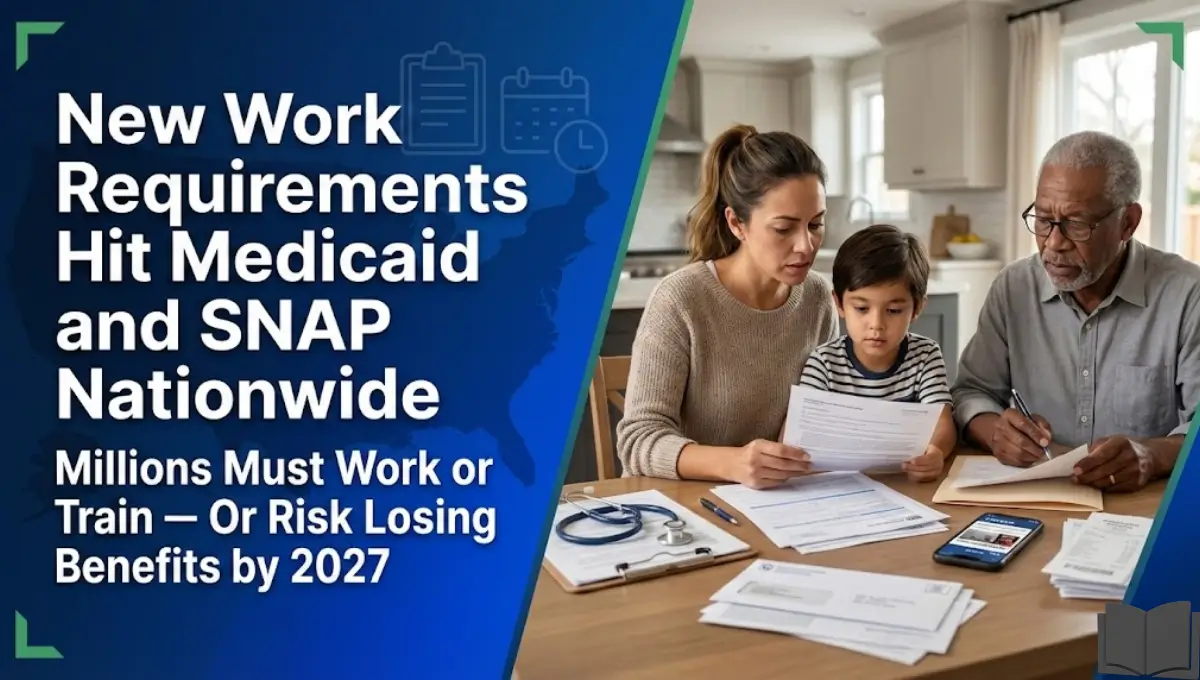
Stricter work rules roll out for Medicaid in 42 states by 2027, mirroring SNAP mandates, millions risk losing benefits unless they clock in or train up.
The changes stem from the One Big Beautiful Bill Act. President Trump signed it in July 2025. This law aims to cut waste and push self-reliance. It updates SNAP, which helps buy food, and Medicaid, which covers health care. SNAP serves 42 million people. Medicaid helps 80 million. Both cost taxpayers billions each year.
For SNAP, rules tightened fast. As of December 1, 2025, able-bodied adults ages 18 to 64 must work or train 80 hours a month. Before, this applied to ages 18 to 49. Now, it’s wider. You prove it with pay stubs or training logs. States check monthly.
What counts as work? Paid jobs, volunteering, or job training. School counts too if full-time. But not all activities qualify. Housework or caring for family doesn’t count unless it’s paid.
Exemptions protect some. Parents with kids under 6 skip it. Pregnant women get a pass. So do people over 64 or with disabilities. If you’re in school half-time or more, you’re exempt. Homeless folks or those in drug treatment often qualify for waivers. About half of SNAP users already work. These rules target those who don’t.
If you miss the hours, you lose SNAP after three months in three years. The Congressional Budget Office says 2.4 million could drop off over ten years. This saves $186 billion, per the law. But anti-hunger groups say it hurts families. Many low-wage jobs don’t offer steady hours. Paperwork alone could cut people off.
Medicaid follows suit. By January 1, 2027, 42 states must add work rules for adults 19 to 64 on expanded coverage. You need 80 hours a month in work, training, or school. This hits states that grew Medicaid under old health laws. Arkansas, Kentucky, and others tried similar rules before. Courts stopped some.
Exemptions match SNAP’s. Parents with kids under 13 are out. So are full-time students or those with health issues. States use SNAP data to check hours. This eases some burden. But up to 4 million could lose health care, per estimates. Critics say it adds barriers. Health groups worry sick people skip meds.
The goal is to boost jobs and cut costs. Agriculture Secretary Brooke Rollins said, “We restore SNAP to nutrition.” Health Secretary Robert F. Kennedy Jr. noted taxpayers pay twice, once for bad food, again for illness. Supporters say it encourages work. Past studies show mixed results. Some people find jobs. Others lose aid without gains.
States face hurdles. They need new systems to track hours. This costs money and time. Some ask for delays to 2028. Rural areas struggle with few jobs. Training spots are limited. Check your state’s plan. Call local offices for details.
If these rules apply to you, act now. Track your hours each month. Report work through your caseworker. Job centers offer free training. Community groups help with forms. If exempt, prove it with doctor notes. Stay calm. Many keep benefits by meeting rules or getting waivers. Resources like 211.org connect you to aid.
These changes roll out over time. SNAP starts now. Medicaid ramps up by 2027. Watch for letters from your state. Update your info to stay covered. This keeps you on track.