Major SNAP work requirement changes take effect across the nation—here’s what you need to know before February 1
As February 2026 begins, hundreds of thousands of Americans face potential loss of food assistance under dramatically expanded work requirements for the Supplemental Nutrition Assistance Program (SNAP).
The sweeping changes, affecting adults up to age 64, represent the most significant tightening of food stamp eligibility in years.
Page Contents
- 1 The 80-Hour Rule: What’s Changing
- 2 Who’s Now at Risk: Expanded Age Brackets
- 3 Removed Exemptions: Veterans and Homeless Individuals
- 4 Are You Still Exempt?
- 5 State-by-State Implementation Timeline
- 6 What You Must Do Right Now
- 7 The Stakes: More Than Just Benefits
- 8 What Happens If You Lose Benefits?
- 9 Resources and Next Steps
The 80-Hour Rule: What’s Changing
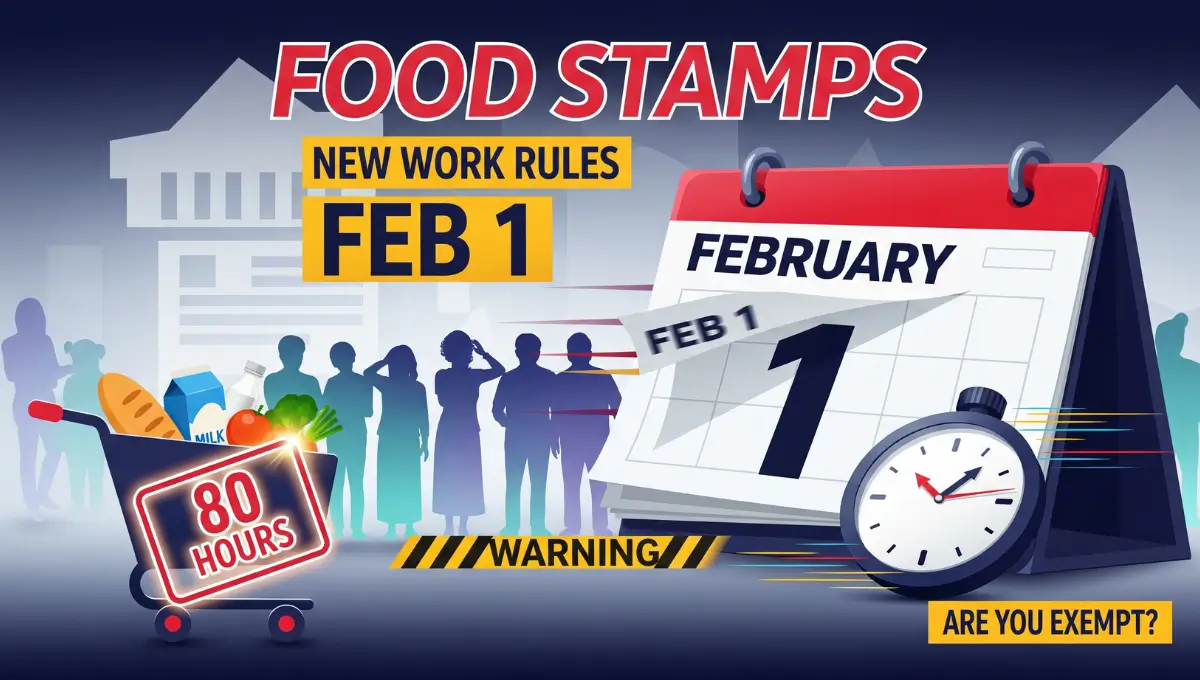
Starting this week, non-exempt adults classified as Able-Bodied Adults Without Dependents (ABAWDs) must document at least 80 hours per month—averaging 20 hours per week—of qualifying activities to maintain SNAP benefits beyond a strict three-month limit.
This isn’t a new concept, but the scope of who must comply has expanded dramatically.
Qualifying Activities Include:
- Paid employment or self-employment
- Approved job training programs
- Volunteering at non-profit organizations
- “Workfare” (working in exchange for benefits)
- SNAP Employment & Training (E&T) programs
The “Three-Month Clock”: Individuals who fail to meet these requirements can only receive SNAP for three months in a three-year period. After that, benefits stop until work requirements are met or an exemption is secured.
Who’s Now at Risk: Expanded Age Brackets
The most dramatic shift involves age requirements. Previously safe groups now find themselves subject to work rules:
Ages 18-54: Consistent Nationwide Enforcement
Temporary state waivers that protected many in this age group have expired. If you’re in this bracket and don’t qualify for an exemption, the 80-hour requirement now applies to you.
Ages 55-64: No Longer Automatically Safe
Under new federal legislation, adults in this age range—previously exempt once they turned 55—must now comply with work requirements. This change alone could affect over 1 million older adults, according to estimates from the Center on Budget and Policy Priorities.
Parents of Teenagers: A New Vulnerability
Adults previously exempt for having dependent children now face work requirements if their youngest child is 14 or older. This represents a significant shift from the previous threshold of 18.
Removed Exemptions: Veterans and Homeless Individuals
Perhaps most controversially, the One Big Beautiful Bill Act removed automatic exemptions for:
- Veterans (regardless of service record)
- People experiencing homelessness
- Former foster youth aged 24 or younger
While some of these removals may not take full effect until 2030 under certain provisions, implementation guidance is creating confusion as state agencies update their systems.
Are You Still Exempt?
Despite the expanded requirements, several exemptions remain. You may avoid work requirements if you are:
✓ Physically or mentally unfit for employment (medical documentation may be required) ✓ Pregnant (at any stage) ✓ Caring for a child under age 14 or a person with disabilities ✓ Enrolled in school at least half-time ✓ Receiving SSI or SSDI benefits ✓ In a drug or alcohol treatment program (regular participation required) ✓ A member of certain federally recognized tribes ✓ Under 18 or over 64 years old ✓ Living in an area with unemployment over 10% (very few areas qualify)
State-by-State Implementation Timeline
Not all states are enforcing these changes on the same schedule:
Illinois: February 2026 is the first countable month. Benefits could be cut starting in May 2026 for those who don’t meet requirements by April.
New York: ABAWD rules take effect March 1, 2026 statewide (except Saratoga County, where they’re already active).
Pennsylvania: Implementation began November 1, 2025 statewide, except in Lancaster and Lebanon counties (September 2026).
Washington D.C.: Early 2026 implementation, with specific date to be announced.
Most other states: December 1, 2025, or varying dates throughout early 2026.
These delays result from court challenges, administrative capacity issues, and state-specific negotiations with federal authorities.
What You Must Do Right Now
1. Check Your Status Immediately
Use your state’s SNAP screening tool or the ABE SNAP Screener to determine if you’re subject to work requirements. Don’t assume you’re exempt—the rules have changed dramatically.
2. Start Documenting Work Hours
If you’re not exempt, begin tracking your work hours immediately. You’ll need to provide documentation such as:
- Employment verification forms
- Pay stubs or timesheets
- Employer contact information
- Tax returns (for self-employed individuals)
- Training program enrollment verification
3. Contact Your Caseworker
If you believe you qualify for an exemption, reach out to your SNAP caseworker now. Don’t wait for a notice—by then, you may already be approaching the three-month deadline.
4. Update Contact Information
Ensure your state SNAP agency has your current phone number, email, and mailing address. Missing a notice could result in benefit loss.
5. Explore Training Programs
If you’re unemployed or underemployed, many states offer SNAP Employment & Training programs that can help you meet work requirements while building job skills.
The Stakes: More Than Just Benefits
For many recipients, SNAP benefits represent the difference between eating regularly and going hungry. The average SNAP benefit is approximately $195 per person per month—not a large amount, but critical for food security.
Critics of the expanded work requirements argue that they create bureaucratic barriers that often push people off benefits even when they’re working or qualify for exemptions. Documentation requirements can be challenging for those with unstable housing, limited internet access, or irregular work schedules.
Supporters contend that work requirements encourage self-sufficiency and ensure that benefits go to those truly unable to work.
What Happens If You Lose Benefits?
If you fail to meet work requirements for three consecutive months, your SNAP benefits will stop. To regain eligibility, you must:
- Meet work requirements for 30 consecutive days, OR
- Qualify for a new exemption, OR
- Wait until the three-year clock resets (36 months from when you first failed to meet requirements)
Resources and Next Steps
Find Your State SNAP Agency: Visit www.fns.usda.gov/snap/state-directory
Check Exemption Status: Use the ABE SNAP Screener or contact your local SNAP office directly
Appeal Process: If you believe you’ve been wrongly denied benefits or your exemption wasn’t recognized, you have the right to appeal. Your denial notice will include instructions.
Get Help: Contact local legal aid organizations if you need assistance navigating the system or appealing a decision.
Bottom Line: With implementation dates arriving this week for many states, time is critical. Whether you’re 22 or 62, a veteran, a parent of teenagers, or someone experiencing homelessness, the rules that previously protected you may no longer apply. Check your status today—don’t wait for a notice that could arrive too late.
For the most current information specific to your state and situation, contact your state SNAP agency immediately.