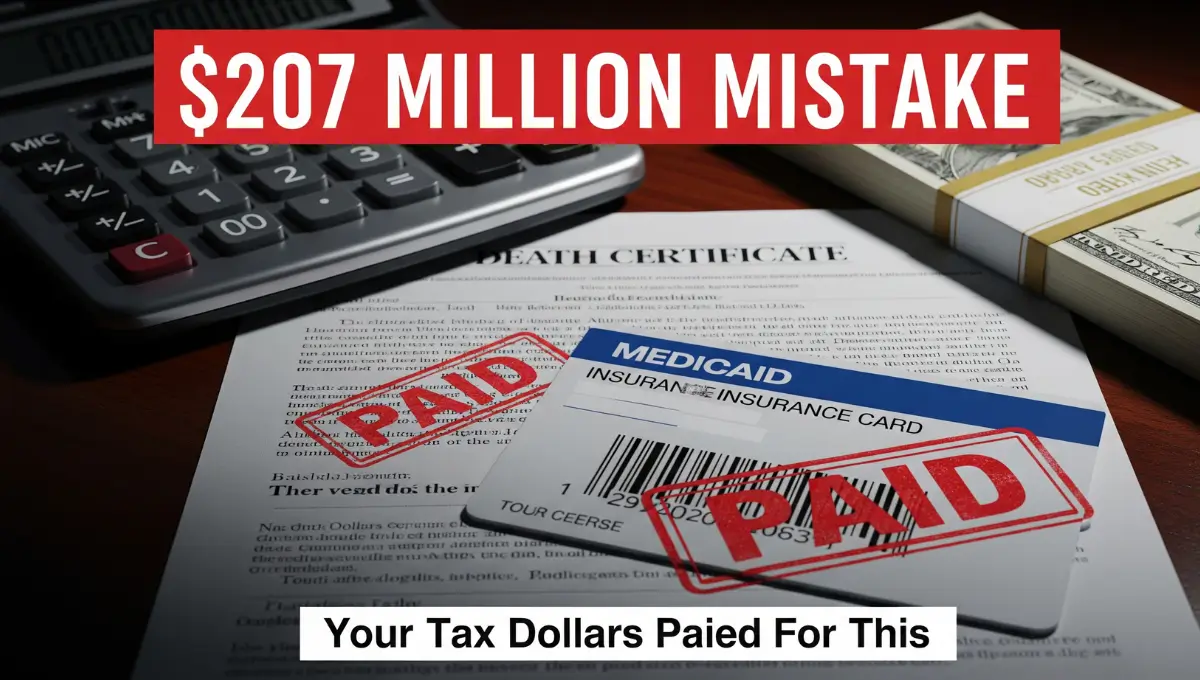
A federal watchdog report released December 23, 2025, found that Medicaid programs paid more than $207 million to health plans for people who were already dead.
The payments happened between July 2021 and June 2022.
The Department of Health and Human Services Office of Inspector General conducted the first nationwide audit of this problem. Investigators checked 100 payments made to managed care organizations.
99 out of 100 payments were sent for people who had already died.
The enrollees’ death dates were verified using the Social Security Administration’s Full Death Master File. This database contains over 142 million death records dating back to 1899.
The federal government’s share of the wasted money was $138.6 million, according to the official OIG report.
Deputy Regional Inspector General Aner Sanchez has investigated this issue for 10 years. He called the problem “widespread” and “persistent.”
This is not a new problem.
Since 2016, federal auditors have found similar payment errors in 18 different states. Those state audits identified approximately $289 million in improper payments to managed care plans for deceased enrollees.
California alone overpaid $71 million. Nearly 29% of those payments continued for over a year after the person died. Texas lost $6.4 million between 2013 and 2015.
States failed to check death records before sending payments. Many agencies didn’t share information properly or update their systems fast enough.
Congress has taken action.
The 2025 Budget Reconciliation Act, signed by President Trump on July 4, 2025, includes new requirements. Starting January 1, 2027, states must check Medicaid lists against federal death records every three months.
A Treasury Department pilot program tested this approach earlier in 2025. It recovered $31 million in just five months by matching payment lists to the death database, PBS NewsHour reported.
Federal investigators said states need better access to death records. They recommended states check the files before making payments, not after.
Some states only discovered the overpayments after federal auditors told them. Many had not set up systems to prevent the problem.
Medicaid’s annual budget exceeds $800 billion. The program serves millions of low-income Americans, children, seniors, and people with disabilities.
Improper payments in Medicaid reached an estimated $31.1 billion in 2024 alone, according to federal tracking data. Not all improper payments are fraud, but they represent money spent incorrectly.
The managed care organizations received capitation payments for enrollees no longer alive. These are monthly fees paid per person enrolled, regardless of whether services were provided.
Federal officials want states to recover the money from health plans that received unallowable payments.
The U.S. Senate Committee on Finance has repeatedly raised concerns about states struggling with proper disenrollment and data sharing.
The report highlights ongoing challenges in Medicaid administration. Better data sharing between agencies could prevent future waste.
Taxpayers fund Medicaid through federal and state taxes. Every dollar paid for a deceased person is money that cannot help living enrollees who need care.