Getting Medicaid in Texas can feel confusing, but we’re here to make it simple. This guide shows you exactly how much money you can make and still qualify for Texas Medicaid in 2026.
We’ll explain the income limits, asset rules, and how to apply—all in easy-to-understand language.
Page Contents
- 1 2026 Key Updates You Need to Know
- 2 Texas Medicaid Income Limits 2026
- 3 Asset Limits for 2026
- 4 What Counts as Income?
- 5 What Counts as Assets?
- 6 Protecting Your Spouse’s Income
- 7 What If You Make Too Much Money?
- 8 The 5-Year Look-Back Period
- 9 Three Types of Texas Medicaid Programs
- 10 Your Personal Needs Allowance
- 11 How to Apply for Texas Medicaid
- 12 Important Contact Numbers
- 13 Estate Recovery Warning
- 14 Tips for Applying Successfully
- 15 Who Can Help You
- 16 Quick Reference Chart
- 17 Texas Medicaid FAQs (2026)
- 17.1 1. What is the income limit for Texas Medicaid in 2026?
- 17.2 2. Can I qualify for Medicaid if I make too much money?
- 17.3 3. How much money can I have in the bank and still get Medicaid?
- 17.4 4. What is the 5-year look-back period?
- 17.5 5. Does my spouse lose everything if I need Medicaid?
- 17.6 6. What happens to my house if I go on Medicaid?
- 17.7 7. How long does it take to get approved for Texas Medicaid?
- 18 Final Thoughts
2026 Key Updates You Need to Know
Here are the most important changes for Texas Medicaid in 2026:
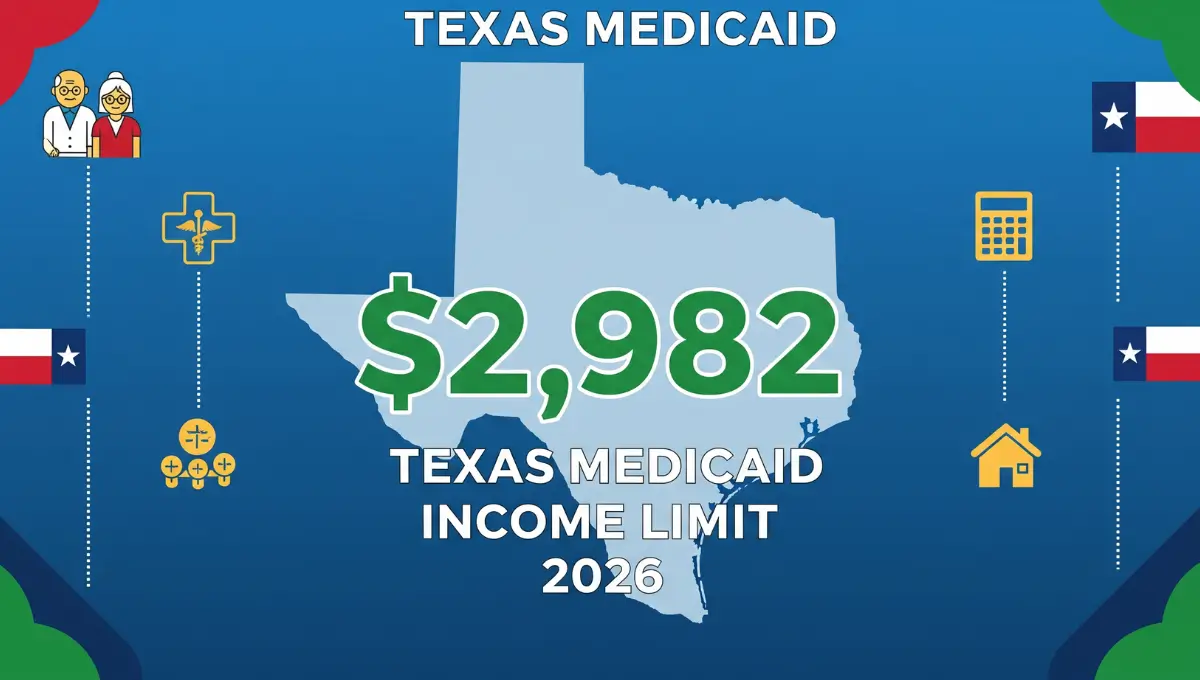
- Nursing Home & Waiver Income Limit: $2,982/month for single people (up from $2,901 in 2025)
- Regular Medicaid Income Limit: $994/month for single people (up from $967 in 2025)
- Asset Limit: Still $2,000 for single applicants
- Home Equity Protection: You can keep a home worth up to $752,000
- Community Spouse Allowance: Your spouse can keep up to $162,660 in assets
- Spousal Monthly Income: Your spouse can keep up to $4,066.50/month
These income limits are specific to Texas. If you’re comparing benefits across states or planning to move, check our complete guide to medicaid income limits 2026 by state to see how Texas compares to other states and find the best coverage for your situation.
Texas Medicaid Income Limits 2026
Texas has different income limits depending on which Medicaid program you need. Here’s what you need to know:
Nursing Home Medicaid & Waiver Programs
| Who’s Applying | Monthly Income Limit |
|---|---|
| Single person | $2,982 |
| Both spouses applying | $5,964 combined |
| One spouse applying | $2,982 for applicant |
Regular Medicaid (MEPD)
This program is for elderly and disabled people who don’t need nursing home care yet.
| Who’s Applying | Monthly Income Limit |
|---|---|
| Single person | $994 |
| Both spouses applying | $1,491 combined |
| One spouse applying | $1,491 for applicant |
Important: To get Regular Medicaid, you must receive SSI (Supplemental Security Income). If you qualify for SSI, you automatically qualify for Texas Medicaid.
Asset Limits for 2026
Besides income, Texas Medicaid also looks at what you own. Here are the limits:
Basic Asset Limits
- Single person: $2,000
- Married couple (both applying): $3,000
If Your Spouse Isn’t Applying
When only one spouse needs Medicaid:
- The applicant can have $2,000 in assets
- The healthy spouse can keep between $32,532 and $162,660
This protection is called the Community Spouse Resource Allowance (CSRA). It helps make sure your spouse doesn’t lose everything when you need long-term care.
What Counts as Income?
Countable Income (counts toward your limit):
- Wages from work
- Social Security benefits
- Pension payments
- IRA or 401(k) withdrawals
- Stock dividends
- Alimony
Non-Countable Income (doesn’t count):
- Medicare premium payments
- VA Aid & Attendance benefits (the extra amount above basic VA pension)
What Counts as Assets?
Countable Assets (count toward your $2,000 limit):
- Cash and bank accounts
- Stocks and bonds
- Investment accounts
- Rental property
- Second homes
Non-Countable Assets (don’t count):
- Your primary home (worth up to $752,000)
- One car (any value)
- Personal belongings and furniture
- Prepaid funeral plans
- Irrevocable burial trusts
Protecting Your Spouse’s Income
Texas protects the income of healthy spouses. Here’s how it works:
If your spouse’s monthly income is less than $4,066.50, you can transfer some of your income to them. This brings their total income up to $4,066.50 without affecting your Medicaid eligibility.
Example: Your spouse earns $2,000/month. You can transfer $2,066.50 to them each month to reach the $4,066.50 protection level.
What If You Make Too Much Money?
Don’t worry—you still have options if your income is over the limit.
Qualified Income Trust (Miller Trust)
If you make more than $2,982/month, you can set up a special trust. Your extra income goes into this trust, and it won’t count toward your Medicaid income limit anymore.
Example: You get $3,500/month in income. You can put $518 into a Miller Trust each month. Now you only have $2,982 counting toward Medicaid, so you qualify.
Spend Down Your Assets
If you have more than $2,000 in assets, you can spend down to qualify. Here are allowed ways to spend:
- Pay off debts
- Fix up your home
- Install wheelchair ramps or stair lifts
- Prepay funeral expenses
- Buy a more reliable car
Warning: You must pay fair market value. Giving money away as gifts will cause problems (see the look-back period below).
The 5-Year Look-Back Period
This is very important: Texas checks all your financial transactions from the past 5 years when you apply for Nursing Home Medicaid or Waiver programs.
If you gave away money or sold things for less than they’re worth during those 5 years, you’ll face a penalty period where you can’t get Medicaid.
Example: You gave your daughter $20,000 two years ago. This will create a penalty period, even though the IRS allows gift tax exemptions.
Good news: The look-back rule does NOT apply to Regular Medicaid (MEPD).
Three Types of Texas Medicaid Programs
1. Nursing Home Medicaid
- Who it’s for: People who need skilled nursing care in a facility
- Income limit: $2,982/month
- Asset limit: $2,000
- Coverage: Full nursing home care in certified facilities
- Availability: Everyone who qualifies gets coverage
2. Medicaid Waivers (STAR+PLUS)
- Who it’s for: People who need nursing home-level care but want to stay home
- Income limit: $2,982/month
- Asset limit: $2,000
- Coverage: Assisted living, home care, adult day care
- Availability: Limited spots, may have waiting lists
3. Regular Medicaid (MEPD)
- Who it’s for: Elderly and disabled people who need help with daily activities
- Income limit: $994/month
- Asset limit: $2,000
- Coverage: Personal care, homemaker services, day care
- Requirement: Must receive SSI
Your Personal Needs Allowance
If you move to a nursing home, you can keep $75 per month for personal items like:
- Haircuts
- Snacks
- Toiletries
- Clothing
Veterans may get additional allowances.
How to Apply for Texas Medicaid
You have three ways to apply:
- Online: Go to YourTexasBenefits.com
- By phone: Call 1-877-541-7905 or dial 2-1-1
- In person: Visit your local HHSC office
Documents You’ll Need
Gather these before you apply:
- Social Security card
- Bank statements (last 3 months)
- Proof of income (pay stubs, award letters)
- Health insurance cards
- Medical records showing you need care
Retroactive Coverage
You might qualify for coverage up to 3 months before your application date. This helps if you have unpaid medical bills from before you applied. Ask your HHSC representative about retroactive eligibility.
Important Contact Numbers
- General Medicaid Help: 1-800-335-8957 (Mon-Fri, 7am-7pm Central)
- Apply or Check Status: 1-877-541-7905 or 2-1-1
- Appeals: 1-800-414-3406
- Report Fraud: 1-800-436-6184
- Medical Transportation: 1-877-633-8747
Estate Recovery Warning
After you pass away, Texas may try to recover Medicaid costs from your estate. This often includes your home.
What this means: If you don’t plan ahead, your home might be sold to pay back the state for your Medicaid benefits instead of going to your children.
Solution: Talk to a Medicaid planning attorney before applying. They can help protect your home and other assets for your family.
Tips for Applying Successfully
Do This:
- Apply as soon as you know you need care
- Keep all financial records organized
- Be completely honest on your application
- Ask about retroactive coverage if you have unpaid bills
- Get help from a Medicaid planner if your situation is complicated
Don’t Do This:
- Give away money or assets within 5 years of applying
- Hide income or assets
- Sell property for less than it’s worth
- Wait until the last minute to apply
Who Can Help You
If your financial situation is complicated, consider getting help from:
- Medicaid Planning Professionals: They specialize in helping people qualify
- Elder Law Attorneys: They can protect your assets legally
- HHSC Representatives: They can answer questions about your application
Quick Reference Chart
| Program | Income Limit (Single) | Asset Limit | Look-Back Period |
|---|---|---|---|
| Nursing Home Medicaid | $2,982/month | $2,000 | 5 years |
| Medicaid Waivers | $2,982/month | $2,000 | 5 years |
| Regular Medicaid (MEPD) | $994/month | $2,000 | None |
Texas Medicaid FAQs (2026)
1. What is the income limit for Texas Medicaid in 2026?
2. Can I qualify for Medicaid if I make too much money?
3. How much money can I have in the bank and still get Medicaid?
4. What is the 5-year look-back period?
5. Does my spouse lose everything if I need Medicaid?
6. What happens to my house if I go on Medicaid?
7. How long does it take to get approved for Texas Medicaid?
Final Thoughts
Texas Medicaid can help pay for long-term care, but you need to meet strict income and asset rules. The good news is that even if you’re over the limits, options like Miller Trusts and spend-down strategies can help you qualify.
The 2026 income limits went up because of the 2.8% Social Security cost-of-living increase. This means more Texans can now qualify for help with nursing home care and home health services.
Remember: Medicaid planning takes time. Don’t give away assets or try to hide income—this will hurt you during the look-back period. Instead, work with professionals who can help you qualify legally while protecting what you can for your family.
Disclaimer: This information is current as of January 2026. Medicaid rules are complex and your situation is unique. Always verify current requirements with Texas HHSC before applying, and consider consulting with a Medicaid planning professional for personalized advice.