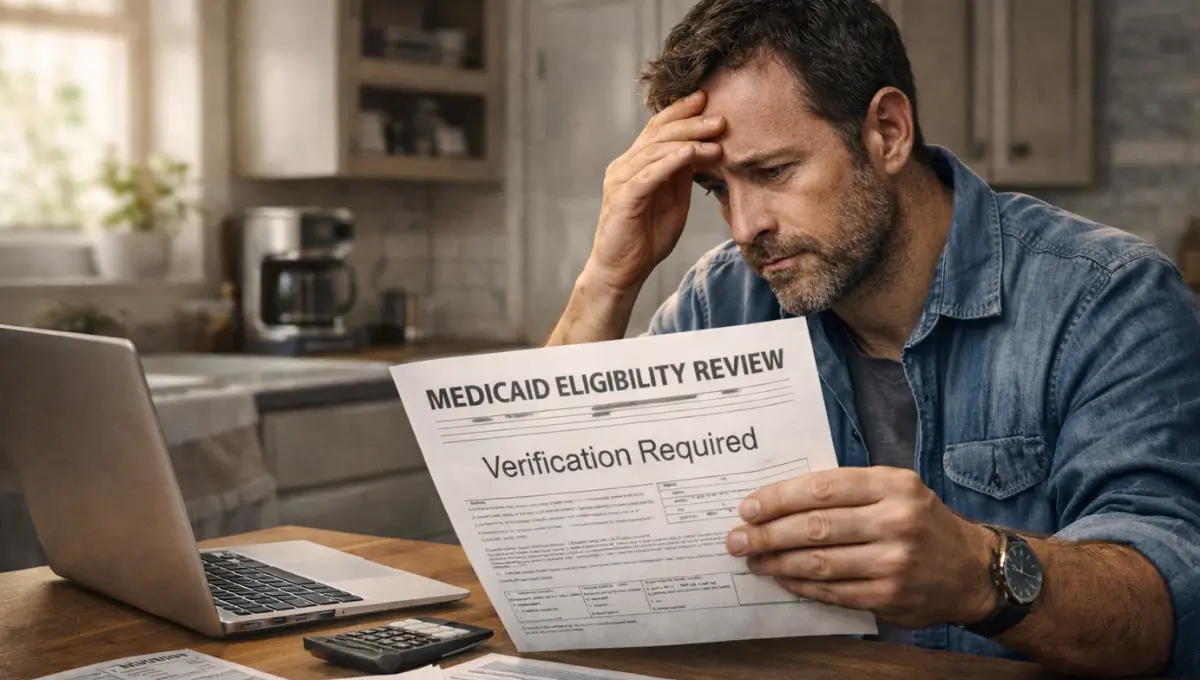
If you’re enrolled in Medicaid, the next few months could determine whether your coverage continues.
A December 2025 federal report revealed that Medicaid programs made over $207 million in improper payments to deceased enrollees between 2021 and 2022 — and now, under a new law, states are expanding audits and verification checks across millions of active accounts in 2026.
Most enrollees did nothing wrong. But if your paperwork isn’t updated, you could be flagged.
Page Contents
What Happened: The $207 Million Problem
“Improper payments” doesn’t mean fraud in most cases. It means Medicaid paid claims for people who were no longer eligible — often because they had died, moved out of state, or experienced income changes that weren’t reported.
According to the HHS Office of Inspector General, delays in updating death records allowed payments to continue for 90+ days after enrollees passed away.
State systems failed to match records against federal databases like the Social Security Death Master File quickly enough.
During the COVID-19 pandemic, states paused routine eligibility checks to maintain continuous coverage. That safety net prevented millions from losing insurance — but it also meant income changes, address updates, and deaths went unverified for years. Some audits found improper payment rates as high as 25-30%.
Now, Congress is demanding accountability.
Why 2026 Changes Everything
In late 2025, Congress passed H.R. 1, which requires all 50 states to audit at least 10% of their Medicaid enrollees every quarter starting in Q1 2026.
States are now cross-checking:
- Income against IRS and employer databases
- Death records through federal and state files
- Addresses and residency status
- Household size and composition
The Centers for Medicare & Medicaid Services (CMS) allocated $500 million in grants to upgrade state technology systems.
High-incidence states like Colorado, Texas, and Florida are leading the expansion, and managed care organizations — which cover 75% of Medicaid enrollees — must now scrub death files quarterly.
This isn’t political. It’s systemic. And it affects you if your records aren’t current.
Will You Lose Medicaid?
Most likely to be reviewed:
- Enrollees over 65 with no recent medical claims
- Anyone with an out-of-state address on file
- People who haven’t responded to renewal notices in the past year
- Households with unreported income changes
Common mistakes that trigger termination:
- Not reporting a salary increase or new job
- Failing to update your address before renewal notices arrive
- Missing the 30-90 day response window for renewal paperwork
- Not reporting births, deaths, or household changes
Who is least likely to be affected:
- Anyone who completes annual renewals on time
- Enrollees who actively use their coverage and have updated contact info
- Those who respond promptly to state notices
- People enrolled in expansion states who verify income regularly
Here’s what matters: Over 80% of Medicaid terminations stem from administrative errors, not intentional fraud. That means if you stay on top of your paperwork, you’re protected.
Documents States Are Checking Right Now
When your state reviews your account, they’ll verify:
Income proof: Pay stubs, tax returns, or employer letters showing you’re still under the income limit (138% of the federal poverty level in expansion states).
Residency: Utility bills, lease agreements, or official mail showing you live in-state.
Household size: Birth certificates, custody agreements, or documentation of who lives with you.
Disability or exemption status: Medical records or Social Security letters if you qualify based on disability.
If any of this information is missing or outdated, your state may automatically suspend or terminate your coverage — even if you’re still eligible. You’ll receive a 10-day advance notice and have 90 days to appeal, but avoiding termination in the first place is easier.
What To Do Before You’re Audited
Don’t wait for your state to contact you. Take these steps now:
Update your income immediately. If you got a raise, started a new job, or lost employment, report it through your state Medicaid portal. In expansion states, monthly income verification is now required.
Check your address. Log into your state Medicaid account (like MyDHR in Alabama or your state’s equivalent) and confirm your mailing address is current. Many people lose coverage simply because renewal notices go to old addresses.
Respond to all mail within 30 days. States send renewal notices by mail and email. Missing the deadline — even by a few days — can trigger automatic termination.
Verify your eligibility early. Use free eligibility checkers on Benefits.gov or your state Medicaid website to simulate your approval status using 2026 income limits. Submit your renewal paperwork 60 days early if your deadline is approaching.
Opt into electronic notices. Paper mail gets lost. Electronic alerts ensure you never miss a deadline.
Monitor your account for unusual claims. If you see medical claims you don’t recognize, report them immediately. It could be a provider error that flags your account.
Check your Medicaid eligibility now before your state reviews it. Waiting until you receive a termination notice makes reinstatement harder.
What This Means for You
The Medicaid audits aren’t designed to kick people off coverage. They’re designed to ensure the program serves those who need it most — and that taxpayer dollars go to active, eligible enrollees.
If your information is accurate and up to date, you have nothing to worry about.
But if you’ve been putting off updating your income, address, or household size, now is the time to act. States are expanding verification systems, and errors that might have been overlooked in 2023 will trigger reviews in 2026.
You have control over this. Early action prevents loss.
Share this article with family members on Medicaid. The audit expansion affects millions of enrollees, and many don’t know it’s happening. The more people update their information now, the fewer will face coverage gaps later.
For state-specific guidance, visit Medicaid.gov or contact your state Medicaid office directly. Information in this article is based on federal regulations and may vary by state.