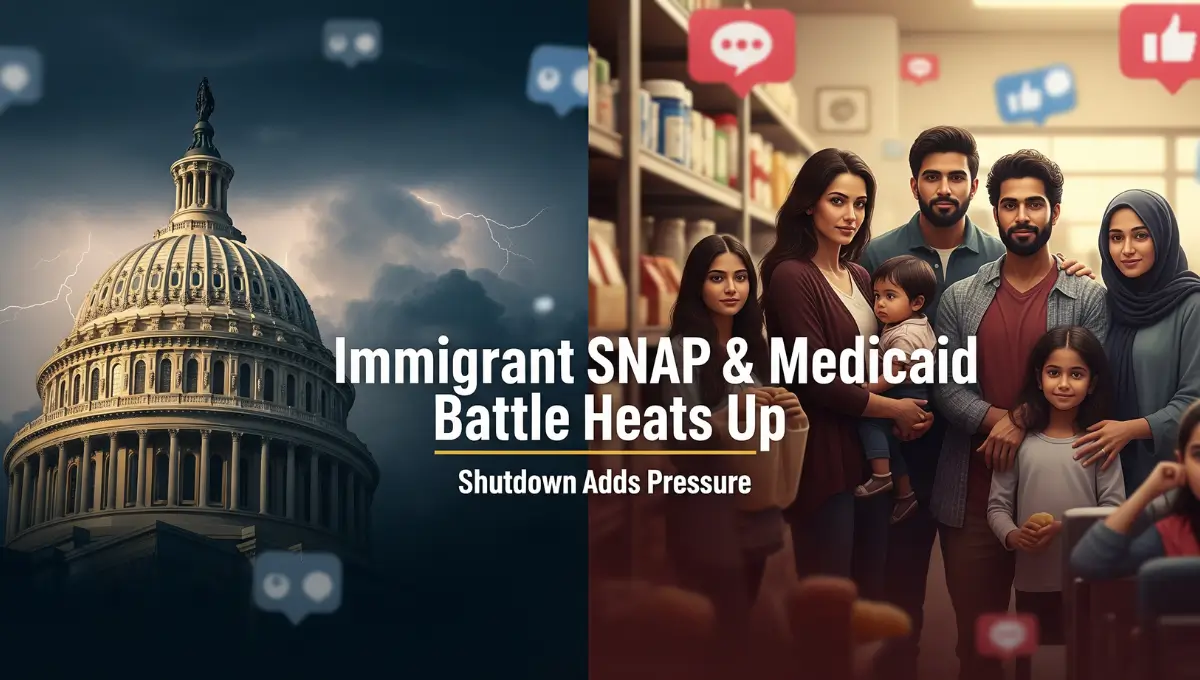
Those viral polls are really pushing to keep immigrants out of SNAP and Medicaid. It’s firing up demands for major changes in who can qualify.
The ongoing shutdown is throwing a spotlight on how much taxpayers shell out for these programs. We’re on day 43 of the federal government shutdown, November 12, 2025.
The online rants and political finger-pointing are all about who should get these benefits. Millions have SNAP payments on hold. Medicaid lines are getting longer.
The whole thing feels tense — a mix of hard facts, crazy rumors, and bottled-up frustration over immigration and where public money goes.
So, what’s driving this chaos? It’s a combo of twisted info and genuine beef with the rules.
The laws are simple enough: Folks without legal papers can’t sign up for SNAP or everyday Medicaid. That’s been the case for years.
Benefits are for U.S. citizens, green card holders (often after a five-year wait), refugees, asylees, and a handful of other qualified people.
But it gets messy in mixed-status families — parents without papers, kids born here as citizens. The help goes straight to the kids, which winds up supporting the whole household.
Critics dub this an “anchor baby” loophole, arguing it’s basically using tax dollars to back illegal immigration.
Take a peek at the threads exploding on X. One post pulls in thousands of views, slamming Democrats for “holding SNAP hostage” in the shutdown to push “free healthcare for illegals.”
Another from a big-follower account claims “most SNAP users are foreigners or illegals” and calls for kicking them out.
This echoes Republican lines, like Agriculture Secretary Brooke Rollins blaming Democrats for favoring “illegal aliens” over American families’ food.
A Gateway Pundit article spreading like wildfire cites a Center for Immigration Studies (CIS) report claiming 54% of federal aid recipients are non-citizens.
It’s stoking demands for audits and total overhauls.
But scratch the surface, and things look different.
That CIS report focuses on non-citizen-led households — including legal immigrants and refugees who actually can qualify.
Data from KFF and Georgetown’s Center for Children and Families shows foreign-born people make up just 11% of SNAP users, far less than those born here.
Undocumented adults? They’re completely shut out from SNAP and full Medicaid, though they can get emergency care under EMTALA.
Rep. Sara Jacobs put it plainly: “Undocumented immigrants are not and have never been eligible for federal SNAP benefits.”
She tied Republican cuts to a $186 billion hit to SNAP that would only hurt U.S. citizens.
The shutdown is turning up the heat on everything.
Republicans accuse Democrats of stalling over undocumented healthcare pushes through ACA updates.
White House statements blast the opposition for fighting to give “criminal illegal aliens” taxpayer-funded Medicaid.
Fact-checks from NPR and CBS clear it up: the debate’s about ACA help for legal residents and citizens, not undocumented folks.
Still, the story sticks around. One post claims Democrats are shutting services to fund $1.5 trillion in spending — non-citizens supposedly in the mix.
If you missed how the Senate’s funding bill could reopen the government and restore SNAP and Medicaid, check out our coverage:
➡️ Senate Pushes Funding Bill to End Shutdown, Safeguarding SNAP and Medicaid
Bills are gaining traction fast.
In Florida, Rep. Randy Fine’s proposal aims to bar non-citizens from welfare, part of the 2025 SNAP shifts for non-citizens.
Nationally, Trump’s “One Big Beautiful Bill” (H.R. 1) weaves in SNAP tweaks like stricter work rules and flat bans on “illegal aliens,” tying directly to shutdown talks.
Supporters highlight viral stats like Afghan households at 45.6% on SNAP and Somali at 42.4%.
Threads buzz with calls to end birthright citizenship, saying it draws welfare seekers.
For context on that broader bill, you can also read:
➡️ Inside Trump’s “One Big Beautiful Bill” and Its Impact on Aid Programs
Immigrants use less welfare than natives, per Migration Policy Institute data, and they contribute billions in taxes, even undocumented ones through sales and payroll.
In Massachusetts, Gov. Maura Healey warned of SNAP shortages if federal funds vanish, but stressed immigrants aren’t the problem — it’s the gridlock.
One user fired back: “Illegals aren’t eligible for SNAP, Medicare, Medicaid, and put billions into the programs through tax $.”
The human stories cut right through the clutter.
Refugees and legal immigrants are taking a beating from the shutdown, facing empty plates just like citizens.
A Texas Tribune report notes 3.5 million Texans rely on SNAP, hitting immigrant-heavy spots where partial payments don’t go far.
In California, state-funded Medi-Cal for undocumented people gets called a “loophole,” but it’s all local cash and doesn’t touch SNAP.
In mixed households, parents might skip meals to stretch benefits for their citizen kids, then health issues land them in ERs — driving up costs for everyone.
Experts warn these debates could reshape the programs entirely.
KFF polls show people still support ACA extensions, but shutdown exhaustion might sway opinions on reforms.
“Immigrant communities will suffer badly if the shutdown drags,” CIS admitted, even as their data fuels the fire.
Feeding America urges sticking to facts: SNAP lifts millions out of poverty and boosts the economy through jobs and taxes.
Congress is eyeing a funding deal, but the fights aren’t letting up.
Florida’s bill and national efforts suggest 2025 will bring tighter SNAP rules for non-citizens, like stricter work requirements or citizenship checks.
For now, the shutdown keeps pressure building.
Viral or not, it’s all about families’ next meals and doctor visits.
If this hits you, check eligibility at USDA or state sites — local groups have non-federal options.
In this divided era, getting clear on who gets help could redefine America’s safety nets for years to come.