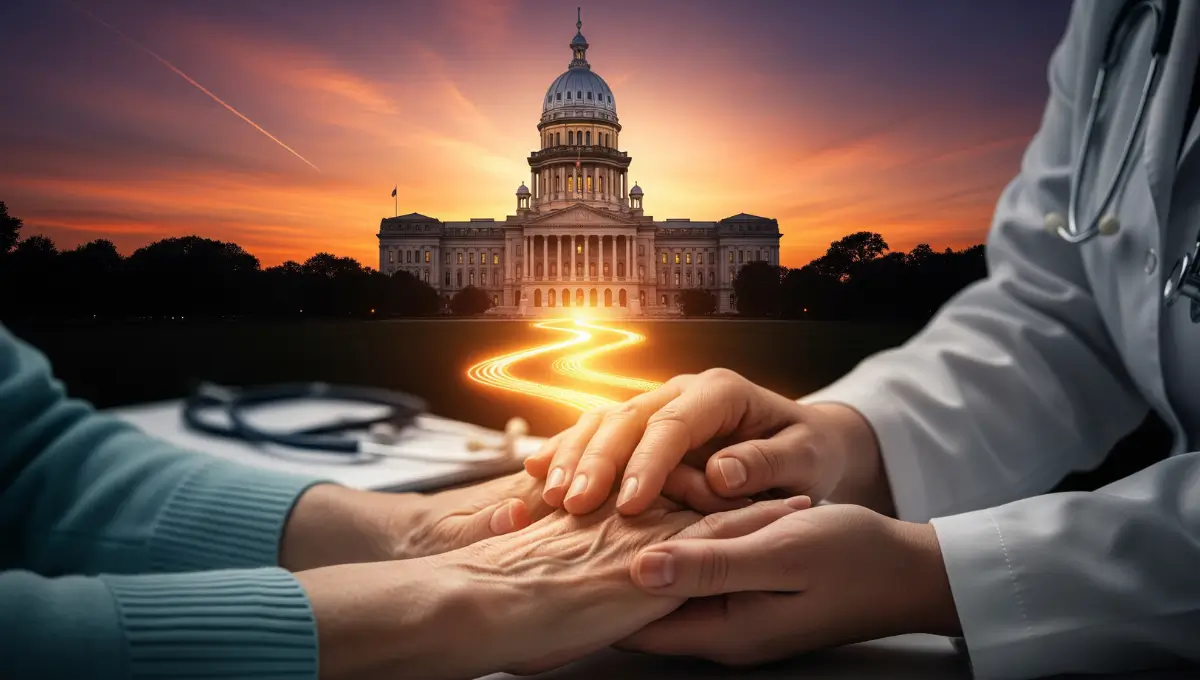
Illinois has approved medical aid in dying for adults who are very sick. Governor JB Pritzker signed the law on December 12. The bill is called Senate Bill 1950. It is also known as Deb’s Law. The law lets some patients ask for medicine to end their lives.
The medicine must be prescribed by a doctor. Illinois is the first state in the Midwest to pass this type of law. It is the 13th place in the United States to do so.
The law does not start right away. It will begin in September 2026. This gives the state time to prepare. Doctors and health agencies will get training. New rules will also be written.
A patient must be at least 18 years old. The patient must live in Illinois. The patient must be able to make their own health choices. Two doctors must agree that the patient is very sick. The doctors must confirm that the patient has six months or less to live.
The patient must ask for the medicine more than once. The requests must be made days apart. One request must be written and signed. Two witnesses must be present. Doctors must explain other choices. These include hospice care and pain treatment.
Only the patient can take the medicine. No one else is allowed to help. No doctor has to take part. No nurse or pharmacist has to help. Hospitals can also refuse. The law makes it a crime to pressure someone. Forcing a patient to ask for the medicine is illegal.
The law includes rules about insurance. These rules also apply to Medicaid. Health plans cannot take away care. They cannot change benefits. This applies even if a patient asks for the medicine. Patients can still get hospice care.
They can still get other treatments. The law does not say insurance must pay for the medicine. Medicaid does not have to cover the cost. This part of the law caused strong debate.
Some disability groups opposed the law. Groups like Access Living raised concerns. They said poor or disabled people could feel pressure. Some may think they must choose a cheaper option.
Health care costs are rising. Medicaid funding is also uncertain. Some groups said the law sends the wrong message. They worry it may suggest some lives matter less.
Supporters disagreed with these claims. Groups like the ACLU of Illinois backed the law. They said the law protects choice. They said benefits stay in place. Supporters also pointed to other states. Places like Oregon and California have similar laws. Reports from those states show no abuse. Death records will list the illness. They will not list the medicine. The Illinois Department of Public Health will track the law.
It will release reports each year. The reports will not name patients. Governor Pritzker said the issue is personal. He spoke about families who have suffered. He said the law gives people dignity. He said it gives a choice at the end of life.
The law is named after Deb Robertson. She is a retired social worker from Lombard. She has a terminal illness. She spent years pushing for this law in Illinois.
With Deb’s Law, Illinois joins states like Oregon and California. Washington, D.C., has also passed a similar law. The debate is not over. Still, supporters say the law gives patients more control during their final days.