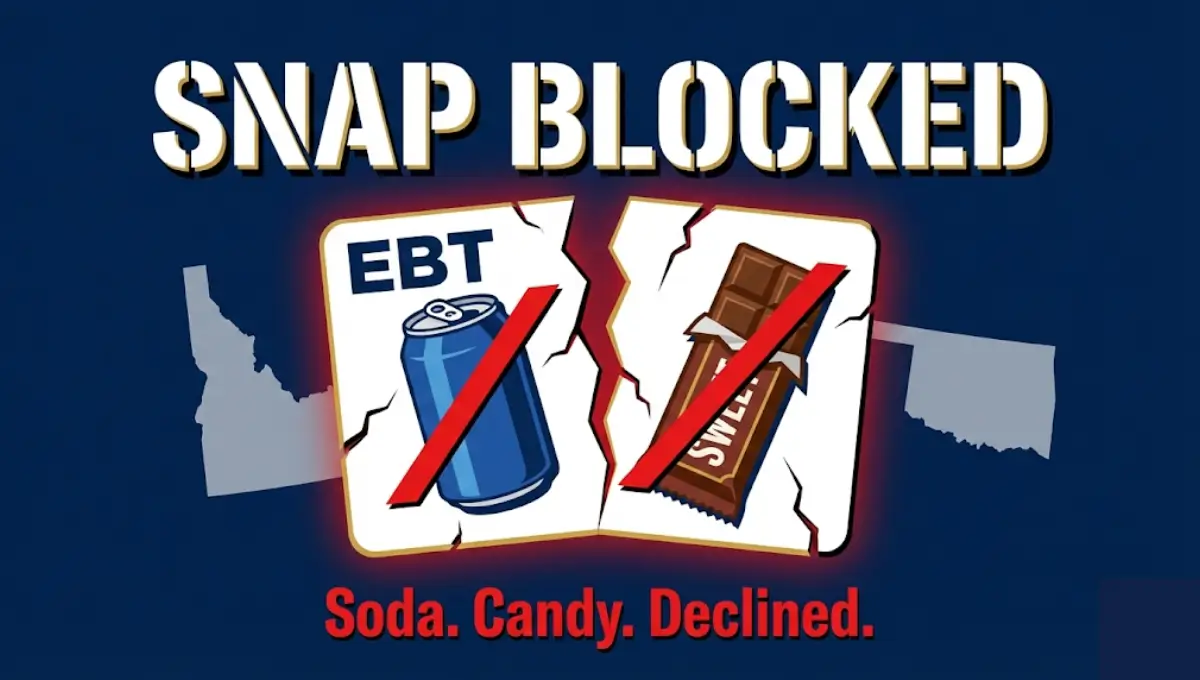
Millions of SNAP recipients in Idaho and Oklahoma woke up to new rules on February 15, 2026. Starting that day, their EBT cards will no longer work for certain sodas and candies at the checkout counter.
The changes are part of a growing federal pilot program tied to the “Make America Healthy Again” (MAHA) initiative. The goal, according to federal officials, is to steer SNAP dollars toward healthier food choices.
But the rollout is already raising questions — and confusion — for families who rely on these benefits every month.
Idaho’s new law, House Bill 109, passed in 2025 and was backed by a federal waiver that allowed the state to move forward with the restrictions. Under the new rules, SNAP cards in Idaho will no longer cover soda or candy at the register.
Idaho defines soda as any nonalcoholic beverage containing natural or artificial sweeteners. Candy is defined as sweetened confections in bar, drop, or piece form.
But here is where it gets complicated.
Idaho’s rules include what many are calling the “flour loophole.” Under the law, any product that contains flour is not legally considered candy. That means a Twix bar or Kit Kat is still eligible under SNAP — but a Snickers or Reese’s Cup is not.
Cookies also remain covered. The distinction has left some shoppers and store clerks scratching their heads at the register.
Drinks that are more than 50% fruit or vegetable juice, contain milk or a milk substitute, or require preparation — like powdered Gatorade mixed at home — are still SNAP-eligible in Idaho.
When a restricted item is scanned, the EBT card will automatically decline that portion of the transaction. Shoppers can still buy the blocked items using cash, debit, or credit.
Oklahoma launched its own version the same day under what the state calls its Healthy Foods Waiver. The restrictions cover soft drinks — including energy drinks and sweetened teas — as well as chocolate bars, gummies, hard candies, and chewing gum.
Fresh produce, meat, dairy, 100% juice, coffee, and unsweetened beverages remain fully covered under Oklahoma’s SNAP program. The ban applies at every SNAP-authorized store in the state, from large grocery chains to convenience stores and farmers’ markets.
Oklahoma and Idaho are not alone. Indiana, Iowa, Nebraska, Utah, and West Virginia all launched similar bans earlier in 2026. Louisiana is set to follow on February 18, 2026.
States like Florida, Texas, and Virginia have announced plans to roll out their own versions later this year.
For low-income families, seniors on fixed incomes, and parents with children, the shift is real and immediate. A mother shopping with two kids in Boise or Tulsa now faces a card decline mid-transaction — even if she didn’t know the item was restricted.
The U.S. Department of Agriculture (USDA), which oversees the federal SNAP program, approved the waivers for both states. The agency has not yet released nationwide guidelines on how retailers should handle disputed transactions.
Recipients in Idaho can visit the Idaho SNAP Updates page for a list of eligible items. Oklahoma residents can check the Oklahoma Healthy Food Waiver site for full details.
Sources: USDA Food and Nutrition Service, Idaho House Bill 109 (2025), Oklahoma Department of Human Services, Make America Healthy Again federal initiative.