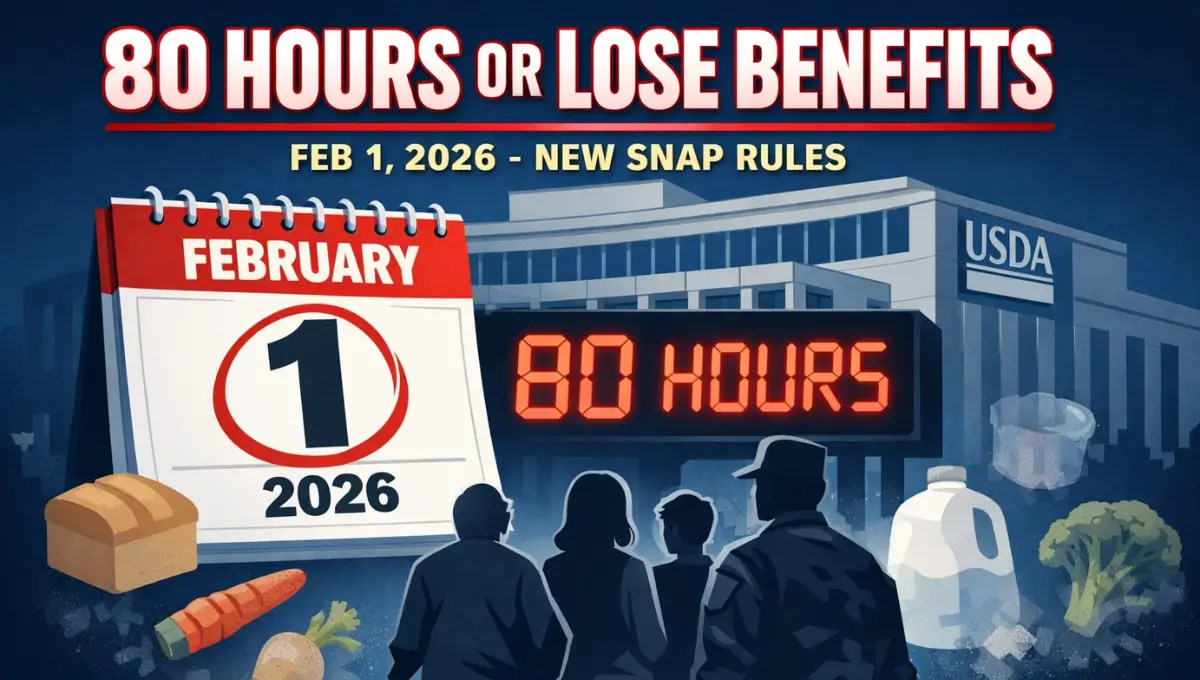
Millions of SNAP recipients face a major change starting this Sunday. New federal work requirements officially take effect February 1, 2026, under legislation passed in July 2025.
The rules force far more people to work or train for 80 hours every month — or lose their food benefits after just three months.
The changes expand who must work. Previously, only adults aged 18 to 54 without young children had to meet work requirements. Now, the age range stretches from 18 to 64 years old, according to the U.S. Department of Agriculture.
That means people in their 50s and early 60s who never had to work before must now comply or risk losing assistance.
Parents with older children are also affected. Under the old rules, parents with any child under 18 were often exempt. Now, if your youngest child is 14 or older, you must meet the work requirement too.
“This is a huge shift for families who thought they were protected,” said a spokesperson from the Center on Budget and Policy Priorities. “Tens of thousands of parents will now need to document their hours or face a cutoff.”
Veterans, homeless individuals, and former foster youth lost their exemptions. These groups were shielded under the 2023 Fiscal Responsibility Act. But H.R. 1, signed into law last summer, eliminated those protections entirely.
Here’s what the 80-hour rule means. Recipients must complete 80 hours per month of work, self-employment, volunteer service, or state-approved training programs. That breaks down to roughly 20 hours per week.
If you don’t meet this requirement, you can only receive SNAP for three months within a three-year window. After that, benefits stop until you regain compliance.
The three-month countdown begins March 1, 2026. That means the first wave of benefit terminations will happen in May 2026, according to the USDA timeline.
Some people are still exempt. You do not have to meet the work requirement if you are medically certified as unable to work, pregnant, or caring for a child under age 14. You may also be exempt if you already work 30 or more hours weekly.
But you must provide proof to your state agency. Without documentation, your benefits could be cut even if you qualify for an exemption.
State agencies are urging immediate action. If you are between 55 and 64 years old, or if your youngest child is 14 or older, you should contact your local SNAP office right away.
“Don’t wait until March,” warned a California Department of Social Services official. “Verify your hours now so there’s no gap in your benefits later.”
The law applies nationwide. All 50 states must enforce the new work requirements starting Sunday. There are no state opt-outs or waivers for high-unemployment areas, which were previously allowed.
Advocacy groups have criticized the changes as harsh and poorly timed. But the federal government says the goal is to encourage self-sufficiency and reduce long-term dependency on assistance programs.
If you’re unsure whether you’re affected, check with your state SNAP office immediately. You can also visit the USDA Food and Nutrition Service website for official guidance and exemption forms.
Failure to act could mean losing grocery assistance as soon as May.