Nearly 250 convenience stores across the country are asking the government for more time. They say a new food-stocking rule could put their SNAP status at risk.
The request came in a letter sent August 31 to Agriculture Secretary Brooke Rollins. It was signed by store locations along with three major trade groups: the National Association of Convenience Stores, the National Association of Truck Stop Owners, and SIGMA, a fuel marketers association. Reuters first reported the letter on September 3, 2026.
This is a request, not a done deal. No convenience store chain has announced it will stop accepting SNAP or EBT cards.
Here is what is actually changing. In May 2026, the U.S. Department of Agriculture finalized updated rules for what SNAP-authorized stores must sell. USDA says the goal is to give SNAP shoppers better access to real, nutritious food.
Right now, stores must stock three varieties of food in each of four categories: dairy, fruits or vegetables, grains, and protein. Starting November 4, 2026, most stores must stock seven varieties in each category instead. They also must offer fresh or perishable options in three of the four categories, up from two.
Store owners say that is a big jump in a short window. In their letter, they told USDA they need more time and clearer guidance to:
- Find and order qualifying foods
- Negotiate new deals with suppliers
- Rearrange shelf space
- Handle the risk of spoiled fresh food
The group asked for a six-month delay in enforcement, to begin after USDA issues more detailed guidance. As of the Reuters report, USDA had not responded to a request for comment.
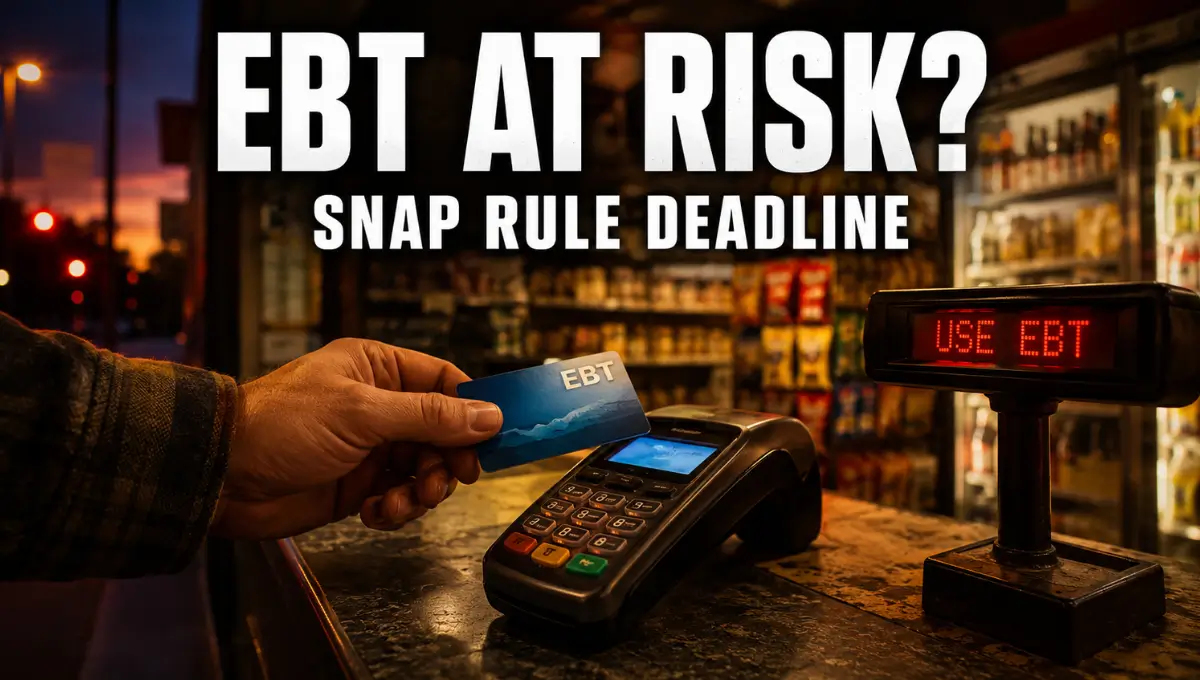
Here is why this matters for shoppers. If a store cannot meet the new rules by November 4, it could lose its authorization to accept SNAP benefits. That means an EBT card would stop working at that specific store — not that a shopper’s SNAP benefits would end or shrink.
This could hit hardest in places where a convenience store or gas station is the closest food option. That includes some rural towns, city food deserts, and areas with limited public transportation.
There is one more important point. This rule controls what stores must stock to keep their SNAP authorization. It does not change what SNAP shoppers are allowed to buy nationwide. Items like butter, jerky, or snack bars may no longer count toward a store’s required inventory, but they can still be SNAP-eligible purchases, depending on the store and state.
What should SNAP recipients do right now? Keep using EBT cards as normal. If a favorite store’s status changes, USDA or the store itself would need to announce it. Shoppers who rely on a specific convenience store can ask the manager whether that location expects any changes before November.
USDA has not said whether it will grant the delay. More updates are expected as the November 4 deadline approaches.
Sources: Reuters, USDA Food and Nutrition Service