Last Updated: March 2026
Medi-Cal is California’s Medicaid program. It gives free or low-cost health coverage to millions of residents. In 2026, big changes affect who can qualify.
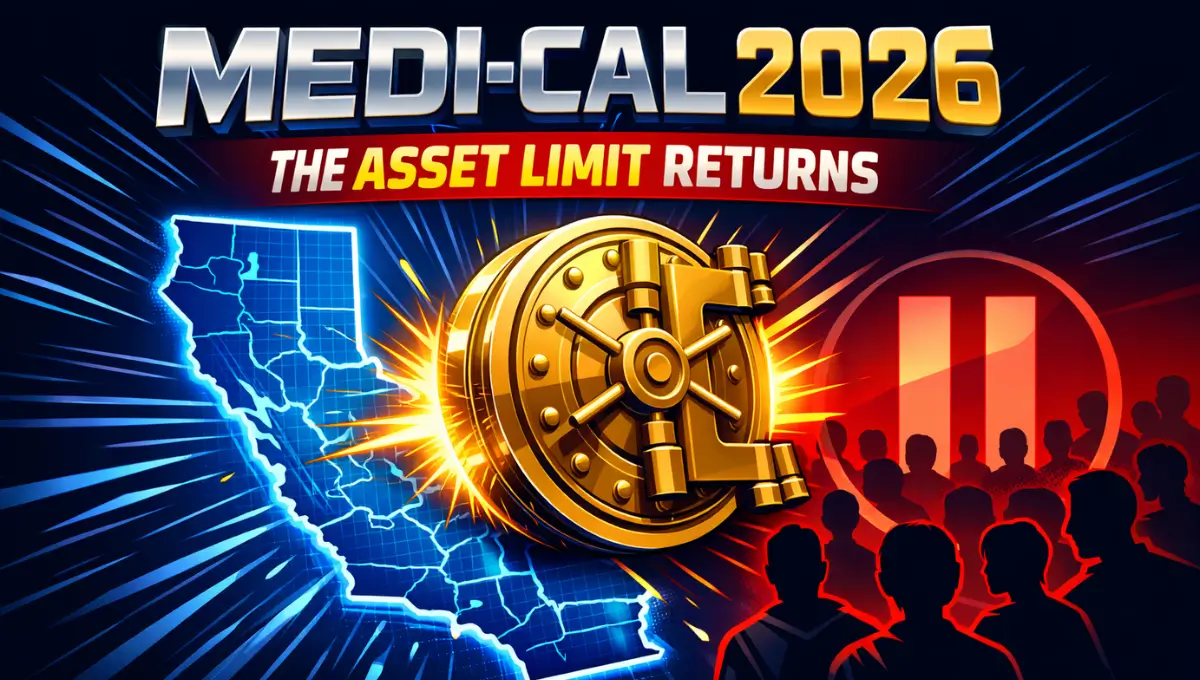
Two major policy shifts took effect on January 1, 2026. Seniors and people with disabilities now face a new asset limit. Also, new undocumented adult applicants can no longer get full-scope coverage.
Here’s what you need to know:
- Adults (ages 19–64) can qualify with income up to $22,025 per year for one person.
- A $130,000 asset limit now applies to seniors and people with disabilities.
- New undocumented adults (19+) are frozen out of full-scope Medi-Cal.
- Children (0–18) and pregnant people can still enroll regardless of immigration status.
- Families of four can qualify with income up to $45,540 per year.
- You can check your eligibility at BenefitsCal.com.
Page Contents
- 1 Who Qualifies for Medi-Cal in 2026?
- 2 2026 Medi-Cal Income Limits by Household Size
- 3 Critical 2026 Policy Change: Asset Limit Reinstatement
- 4 Critical 2026 Policy Change: Undocumented Enrollment Freeze
- 5 Medi-Cal Program Types: Which One Is Right for You?
- 6 How to Apply for Medi-Cal in 2026
- 7 What Does Medi-Cal Cover?
- 8 Next Steps: Verify Your Eligibility Now
- 9 Frequently Asked Questions
- 9.1 What is the Medi-Cal income limit for a single person in 2026?
- 9.2 Did California bring back the Medi-Cal asset test in 2026?
- 9.3 Can undocumented adults still get Medi-Cal in 2026?
- 9.4 Does my home count as an asset for Medi-Cal?
- 9.5 What happens if I miss my Medi-Cal renewal?
- 9.6 What is the California Premium Subsidy for 2026?
Who Qualifies for Medi-Cal in 2026?
Most adults in California qualify for Medi-Cal based on income alone. The program uses Modified Adjusted Gross Income (MAGI) to decide eligibility. If you earn under the income limit, you may get coverage.
MAGI Medi-Cal (Adults 19–64 and Children)
This is the most common type of Medi-Cal. It covers working-age adults and kids. There is no asset test for this group. Only income matters.
To qualify, your household income must stay below 138% of the Federal Poverty Level (FPL). For children, the limit is higher at 266% FPL.
You can compare California’s rules with other states using our guide on Medicaid income limits by state in 2026.
Non-MAGI Medi-Cal (Seniors and People With Disabilities)
This type of Medi-Cal is for adults aged 65 and older. It also covers people with blindness or disabilities. These applicants must now pass both an income test and an asset test.
The asset limit was removed in 2024 but came back on January 1, 2026. This change happened because of state budget constraints.
2026 Medi-Cal Income Limits by Household Size
For MAGI-based programs, your Modified Adjusted Gross Income decides if you qualify. Below are the yearly income limits based on household size.
| Household Size | Adults (138% FPL) | Children (266% FPL) |
|---|---|---|
| 1 Person | $22,025 | $42,454 |
| 2 People | $29,900 | $57,600 |
| 3 People | $37,770 | $72,700 |
| 4 People | $45,540 | $87,780 |
Note: These figures are based on 2026 Federal Poverty Level guidelines from the U.S. Department of Health and Human Services. “Children” means ages 0–18.
These income limits are set at the federal level each year. They apply to most Californians who apply for Medi-Cal through the standard MAGI pathway.
Not sure if your income qualifies? Use our Medicaid eligibility calculator for 2026 to check your status quickly.
Want to understand how California compares to other states? Check the full breakdown of California Medicaid income limits in 2026.
Critical 2026 Policy Change: Asset Limit Reinstatement
This is one of the biggest Medi-Cal changes in years. California brought back the asset limit for Non-MAGI programs. This directly affects older adults and people with disabilities.
Who Is Affected?
The asset test applies to people aged 65 and older. It also applies to those with blindness or disabilities who use Non-MAGI Medi-Cal. Standard adults (ages 19–64) under MAGI rules are not affected. They still have no asset test.
What Are the New Asset Limits?
| Category | Asset Limit |
|---|---|
| Individual | $130,000 |
| Couple | $195,000 |
| Each Additional Household Member | +$65,000 |
What Counts as an Asset?
Countable assets include bank accounts, cash, stocks, bonds, and extra real estate. However, your primary home and one vehicle are generally exempt. They do not count toward the limit.
What Happens at Renewal?
Current Medi-Cal members do not lose coverage right away. The asset limit applies at your next annual renewal in 2026. If you are over the limit, you will have 90 days to provide asset information or reduce your assets.
Any transfers made between January 1, 2024, and December 31, 2025, will not be held against you. During that period, assets were not part of eligibility rules.
To learn more about how provider payments work, see our guide to the California Medicaid fee schedule in 2026.
Critical 2026 Policy Change: Undocumented Enrollment Freeze
California’s “Health for All” expansion previously allowed undocumented adults to get full-scope Medi-Cal. That changed on January 1, 2026.
What Changed?
New undocumented adult applicants (aged 19 and older) can no longer enroll in full-scope Medi-Cal. This freeze is due to state budgetary constraints. If you did not apply before January 1, 2026, you may only qualify for emergency or pregnancy-related services.
Who Can Still Get Coverage?
- Already enrolled: If you had full-scope Medi-Cal before 2026, you keep it. You must complete your annual renewal on time.
- Children (0–18): Kids can still enroll regardless of immigration status.
- Pregnant people: Pregnant individuals can still get full-scope coverage. It lasts through the pregnancy and one year after delivery.
What If You Lose Coverage?
If you lose coverage due to a late renewal or missing paperwork, you have 90 days to fix it and stay enrolled. After that window closes, you cannot re-enroll for full-scope coverage.
Additional 2026 Changes for Undocumented Enrollees
Starting July 1, 2026, dental benefits will no longer be available to adult Medi-Cal members who lack satisfactory immigration status. Starting July 2027, certain members in this group will also need to pay $30 per month to keep full-scope coverage.
Medi-Cal Program Types: Which One Is Right for You?
California offers different Medi-Cal pathways. Your age, income, disability status, and immigration status determine which one applies.
MAGI Medi-Cal
This is for adults ages 19–64 and children. There is no asset test. You only need to meet the income limits shown above.
Non-MAGI Medi-Cal
This covers people aged 65 and older or those with disabilities. You must meet both income and asset limits. The asset cap is $130,000 for one person.
Covered California (If Over Income)
If you earn too much for Medi-Cal, you may still get help. Covered California offers subsidized health plans. New for 2026, the California Premium Subsidy helps people earning up to 165% of the Federal Poverty Level.
For example, a single person earning above $22,025 but below roughly $26,334 may get extra help paying premiums.
For a broader view of how Medicaid programs pay healthcare providers across states, read about the Medicaid fee schedule in 2026.
How to Apply for Medi-Cal in 2026
Applying for Medi-Cal is free. You can apply in several ways.
- Online: Visit BenefitsCal.com to apply from home.
- By phone: Call your local county social services office.
- In person: Visit your county Medi-Cal office with your documents.
- By mail: Download an application and send it to your county office.
Documents You May Need
- Proof of identity (ID or birth certificate)
- Proof of income (pay stubs, tax returns)
- Proof of residency (utility bill, lease)
- Social Security number (if applicable)
- Asset information (for Non-MAGI applicants aged 65+)
What Does Medi-Cal Cover?
Medi-Cal provides a wide range of health services at little or no cost. Covered benefits include:
- Doctor visits and preventive care
- Hospital and emergency services
- Prescription drugs
- Mental health and substance use treatment
- Vision and dental care
- Immunizations
- Reproductive health services
Next Steps: Verify Your Eligibility Now
If you are unsure which Medi-Cal category fits you, take action now. The 2026 rules are stricter than previous years. This is especially true if you are over 65 or an undocumented resident.
Visit BenefitsCal.com or call your local county office today. Do not wait for your renewal notice. Being proactive can protect your coverage.
Frequently Asked Questions
What is the Medi-Cal income limit for a single person in 2026?
A single adult (ages 19–64) can earn up to $22,025 per year. This equals 138% of the Federal Poverty Level. Children have a higher limit of $42,454 at 266% FPL.
Did California bring back the Medi-Cal asset test in 2026?
Yes. Starting January 1, 2026, the asset limit returned for Non-MAGI programs. Individuals must have under $130,000 in countable assets. Couples must stay under $195,000.
Can undocumented adults still get Medi-Cal in 2026?
New undocumented adult applicants cannot enroll in full-scope Medi-Cal after January 1, 2026. Those already enrolled can keep coverage if they renew on time.
Does my home count as an asset for Medi-Cal?
No. Your primary home and one vehicle are generally exempt. They do not count toward the $130,000 asset limit.
What happens if I miss my Medi-Cal renewal?
If you are an undocumented enrollee who misses renewal, you have 90 days to fix it. After that, you may lose coverage permanently and cannot re-enroll for full-scope benefits.
What is the California Premium Subsidy for 2026?
If your income is too high for Medi-Cal but under 165% FPL, you may get state-funded help. This subsidy lowers your monthly premium on Covered California health plans.
Sources: California Department of Health Care Services (DHCS) | U.S. Department of Health and Human Services – 2026 Poverty Guidelines | Justice in Aging – Medi-Cal Asset Limit FAQ